
What buyers usually source in this category
Pet supply programs often combine practical daily-use items, retail impulse products, travel accessories, and replenishment lines. The buying decision is usually about assortment logic, not just one SKU price.
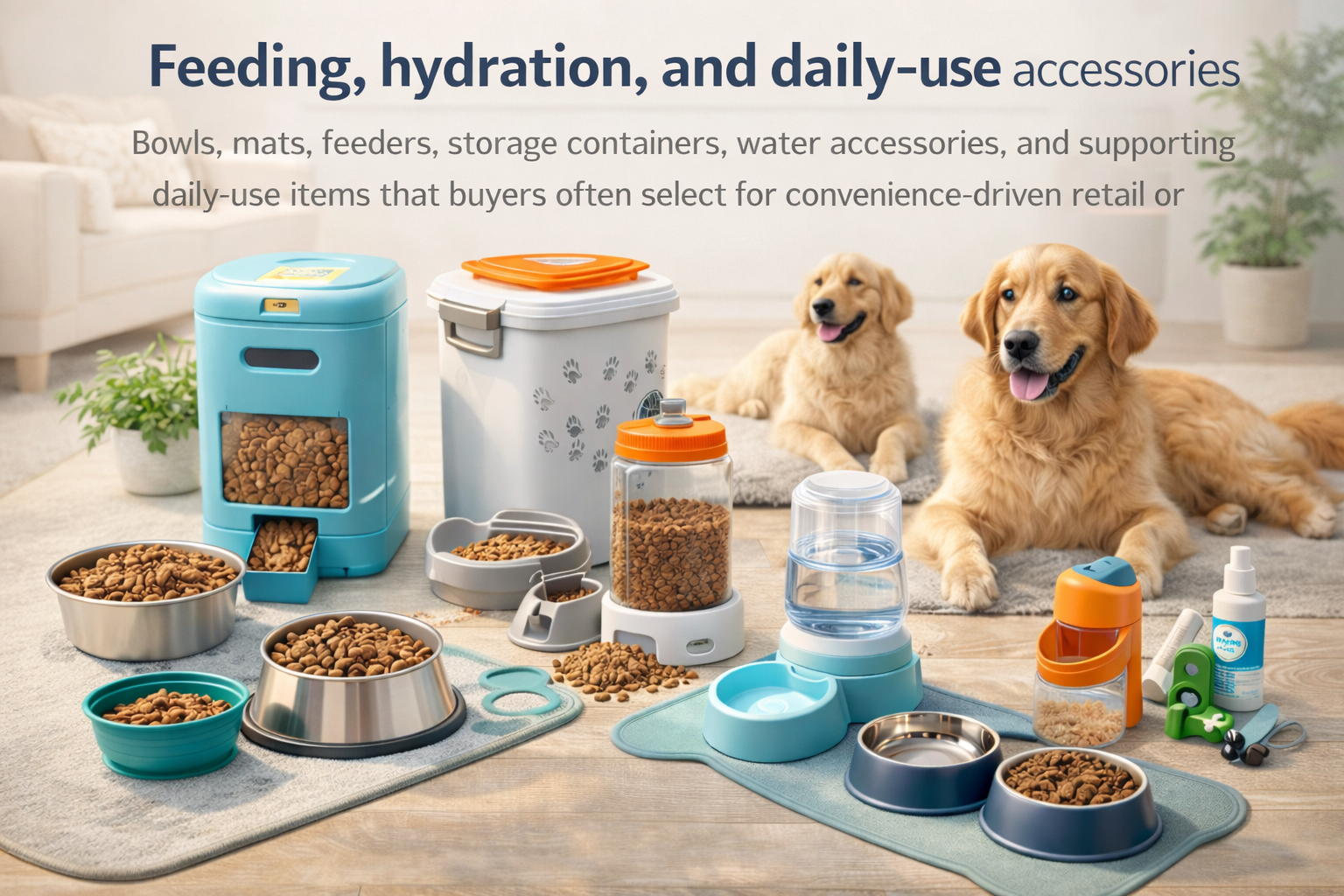
Feeding, hydration, and daily-use accessories
Bowls, mats, feeders, storage containers, water accessories, and supporting daily-use items that buyers often select for convenience-driven retail or repeat-order programs.
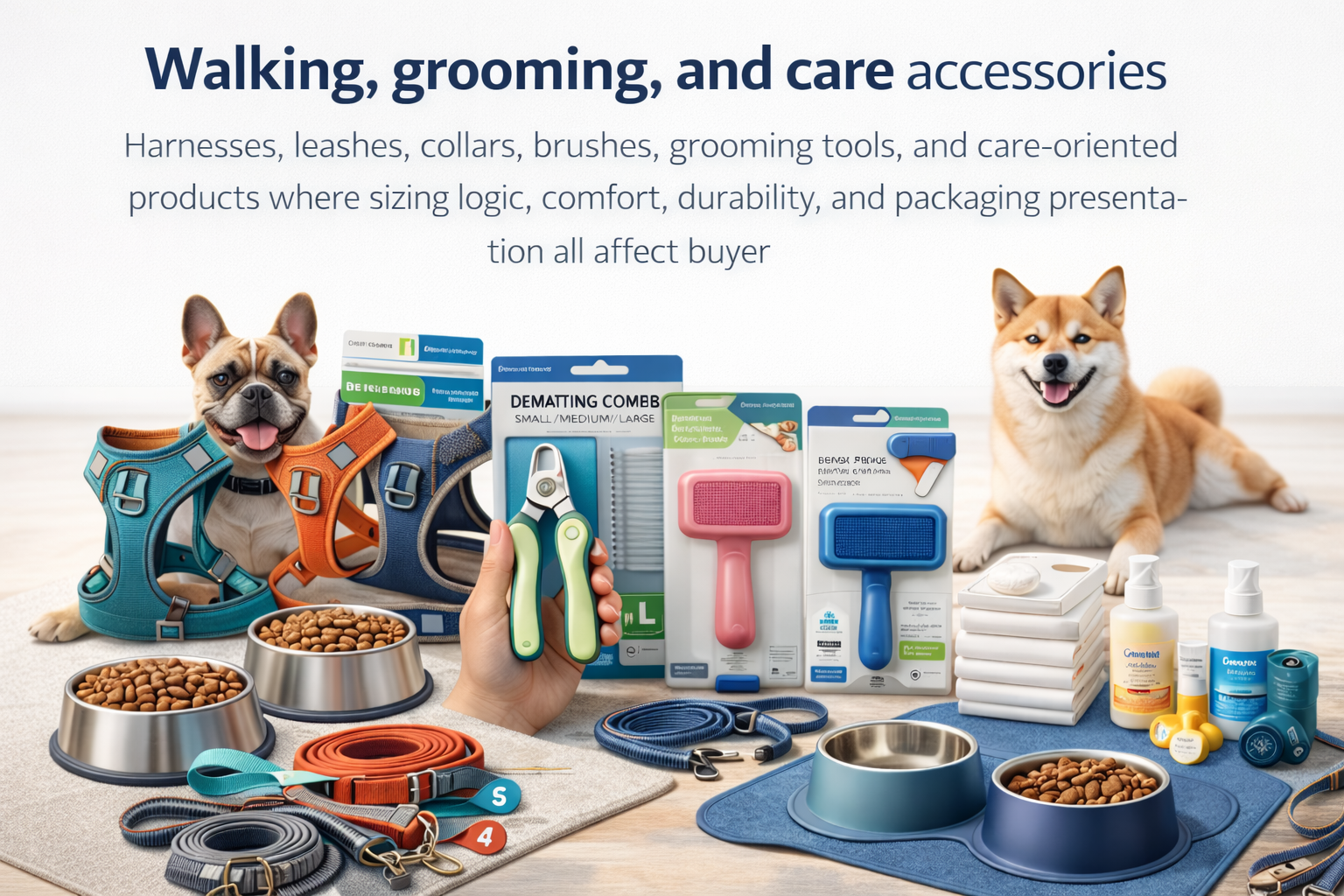
Walking, grooming, and care accessories
Harnesses, leashes, collars, brushes, grooming tools, and care-oriented products where sizing logic, comfort, durability, and packaging presentation all affect buyer decisions.
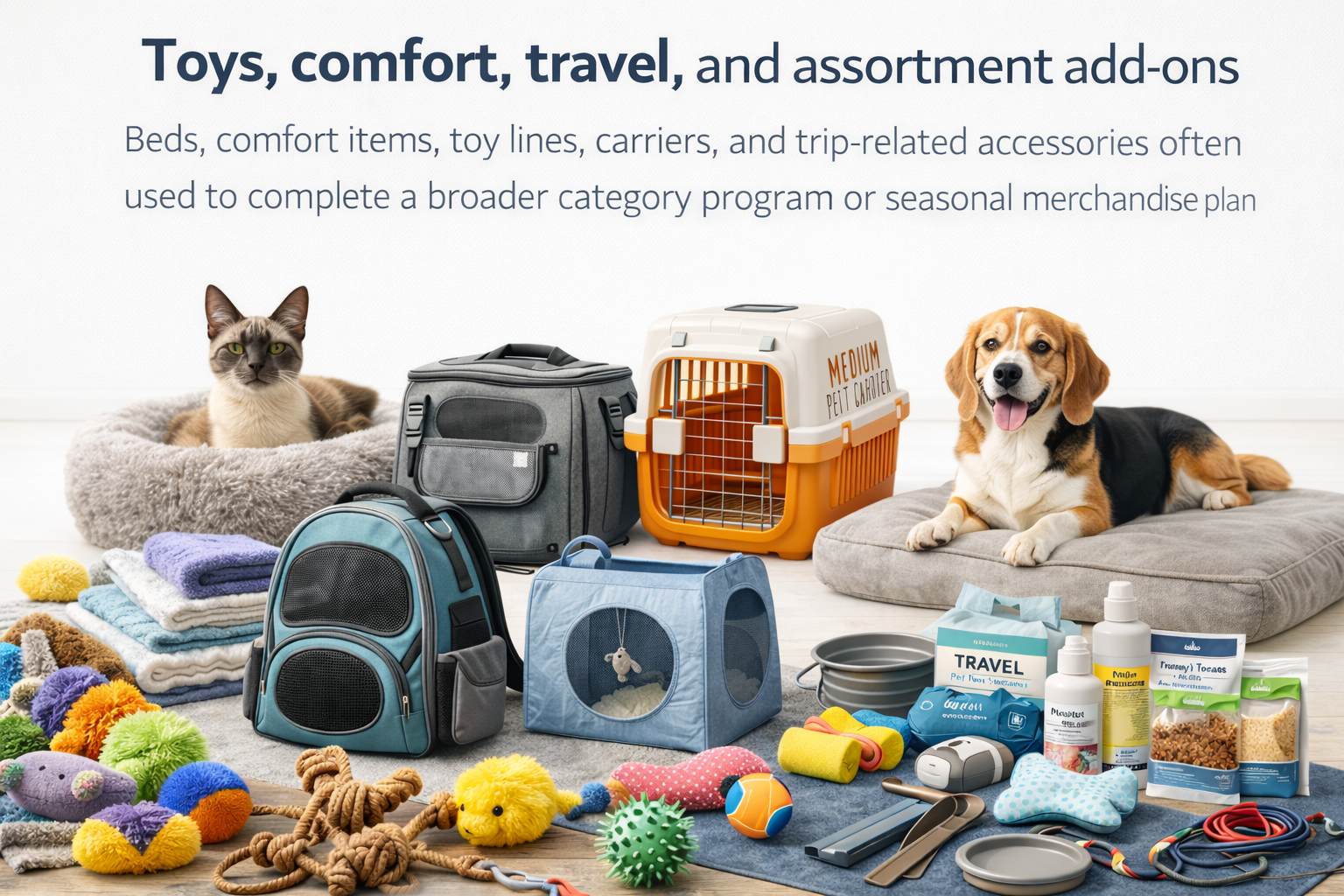
Toys, comfort, travel, and assortment add-ons
Beds, comfort items, toy lines, carriers, and trip-related accessories often used to complete a broader category program or seasonal merchandise plan.

Pet supply buying is often an assortment problem, not a single-item problem.
The real challenge is often deciding what should go together, which items should share packaging logic, which sizes or colors need to stay aligned, and how the final order should be grouped for retail, online fulfillment, or repeat replenishment.
Retail shelf assortments
Daily-use bowls, grooming tools, walking accessories, and toy add-ons selected as a balanced line rather than isolated products.
E-commerce bundle projects
Mixed packs where size, color, insert cards, barcode positions, and set count need to stay controlled before stock is released.
Seasonal and promotional launches
Holiday, travel, puppy starter, or gifting-oriented programs where packaging presentation affects conversions and repeat ordering.
Repeat-order replenishment lines
Projects where buyers care about whether later batches still match previous size standards, packaging direction, and assortment structure.
What buyers usually need to confirm before ordering
In pet supplies, small unchecked details often turn into large bulk problems later. The buyer usually needs clarity on suitability, finish, packaging logic, and how the final packed order will actually arrive.
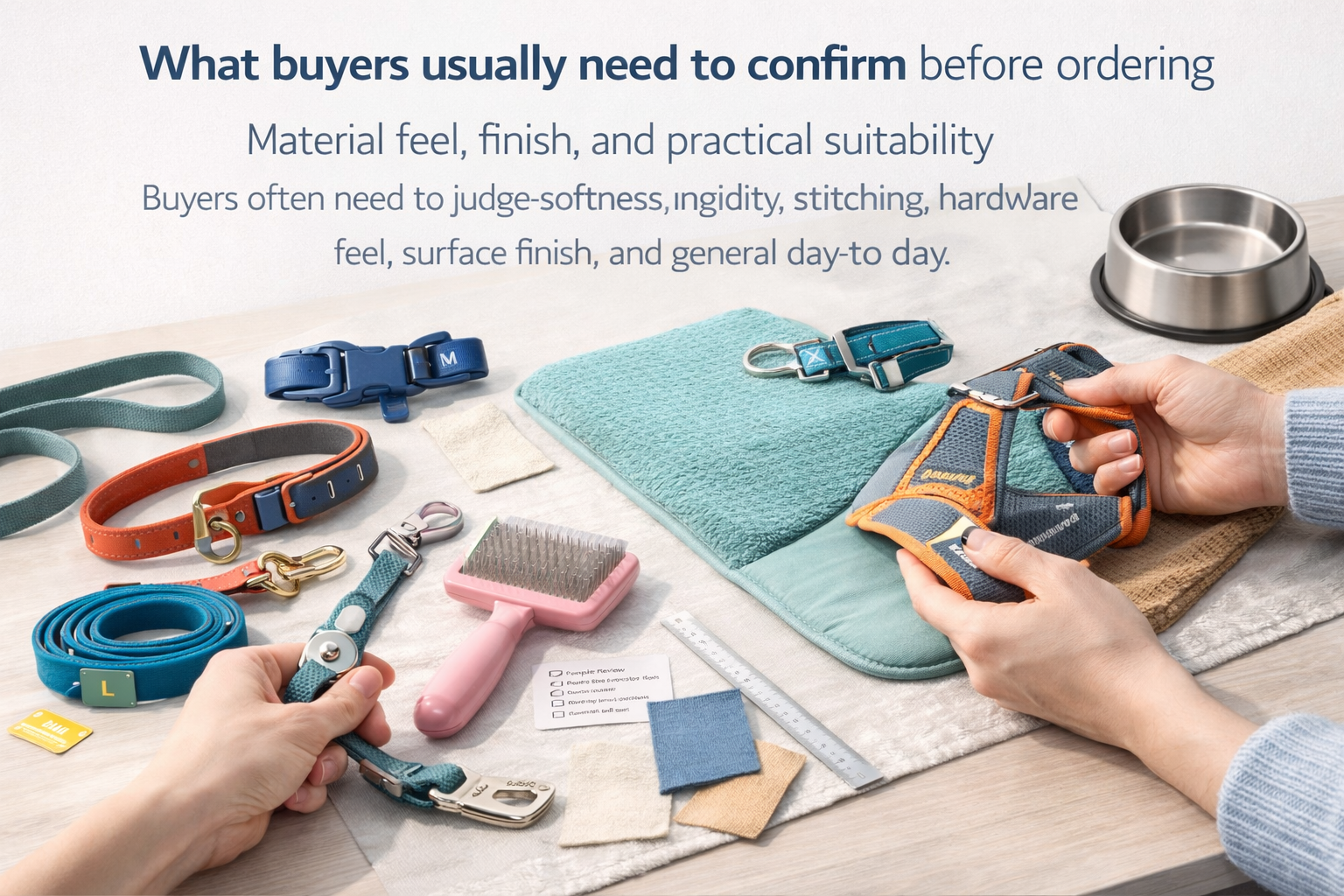
Material feel, finish, and practical suitability
Buyers often need to judge softness, rigidity, stitching, hardware feel, surface finish, and general day-to-day suitability before moving beyond quotes.
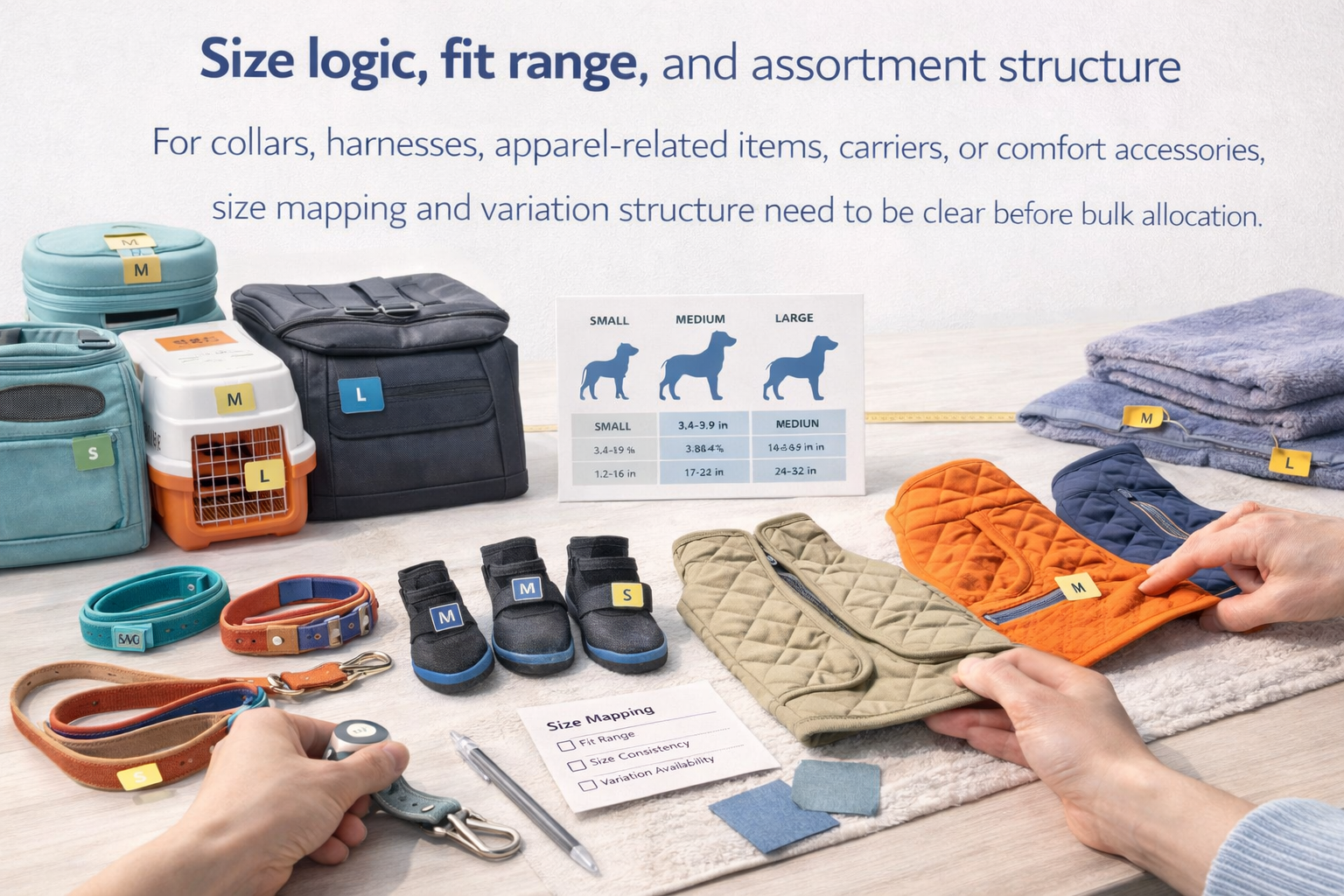
Size logic, fit range, and assortment structure
For collars, harnesses, apparel-related items, carriers, or comfort accessories, size mapping and variation structure need to be clear before bulk allocation starts.
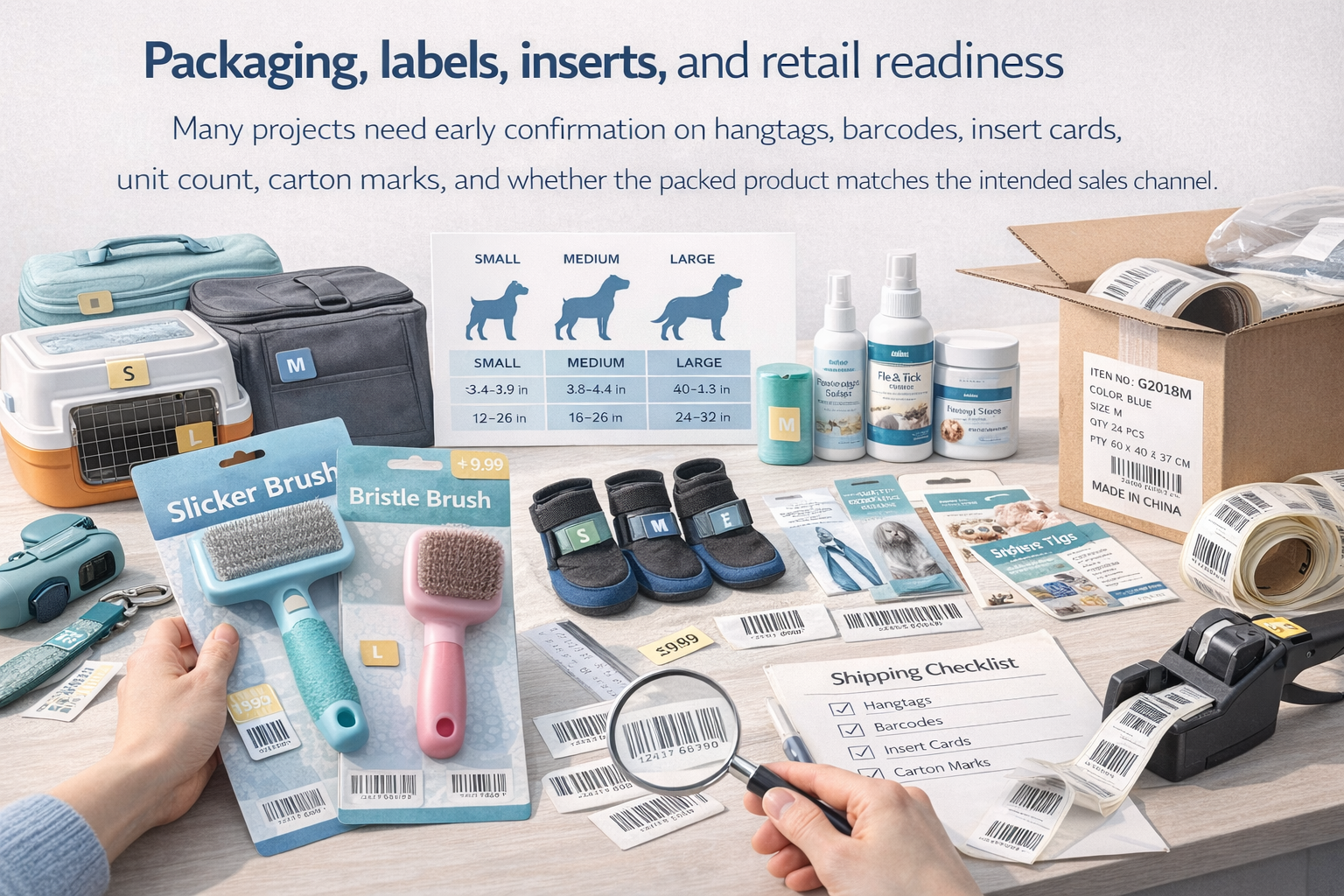
Packaging, labels, inserts, and retail readiness
Many projects need early confirmation on hangtags, barcodes, insert cards, unit count, carton marks, and whether the packed product matches the intended sales channel.
Common risk points buyers run into on pet supply projects
These risks usually hurt after sampling, during packing, or right before shipment. The real cost is often lost launch time, broken assortment logic, and more manual correction than the buyer expected.
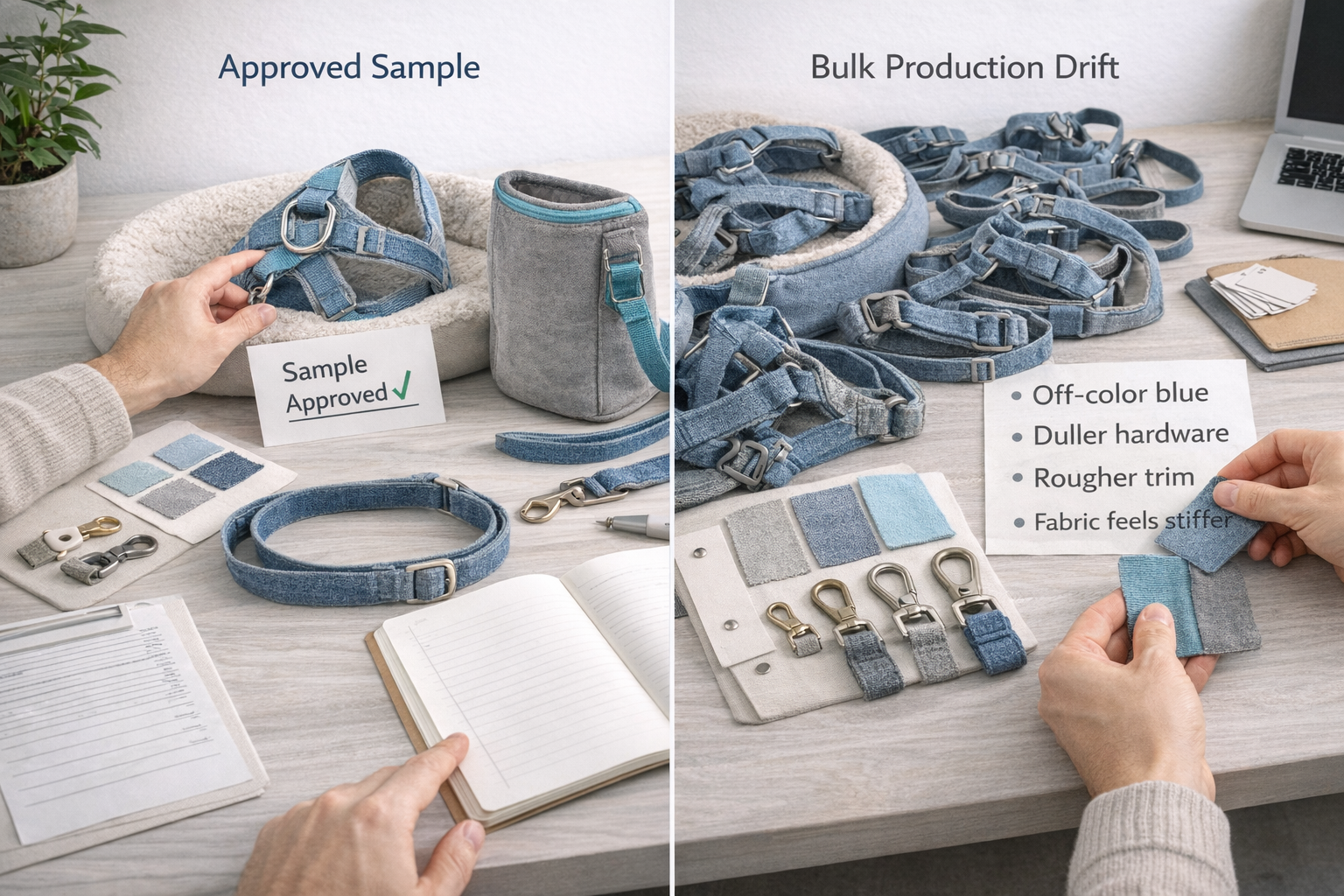
Risk 01
Approved direction does not translate cleanly into bulk
Color shade, hardware feel, trim details, softness, or finishing quality may drift if the buyer's approval points were never made concrete enough before production.
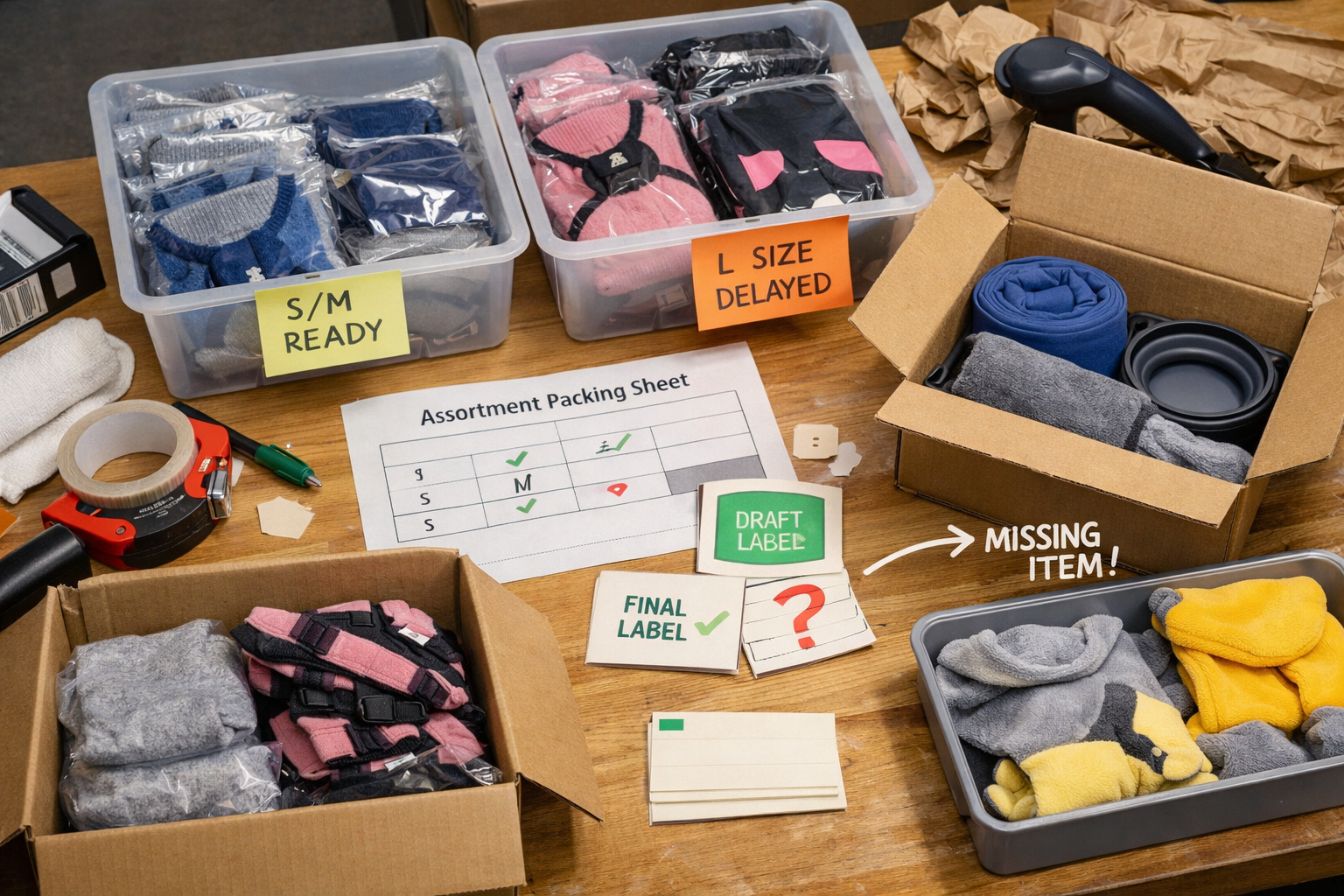
Risk 02
Mixed-SKU projects lose alignment during packing
One size may be ready, another delayed; one label approved, another still open. That can break the logic of the final assortment, bundles, or replenishment shipment.
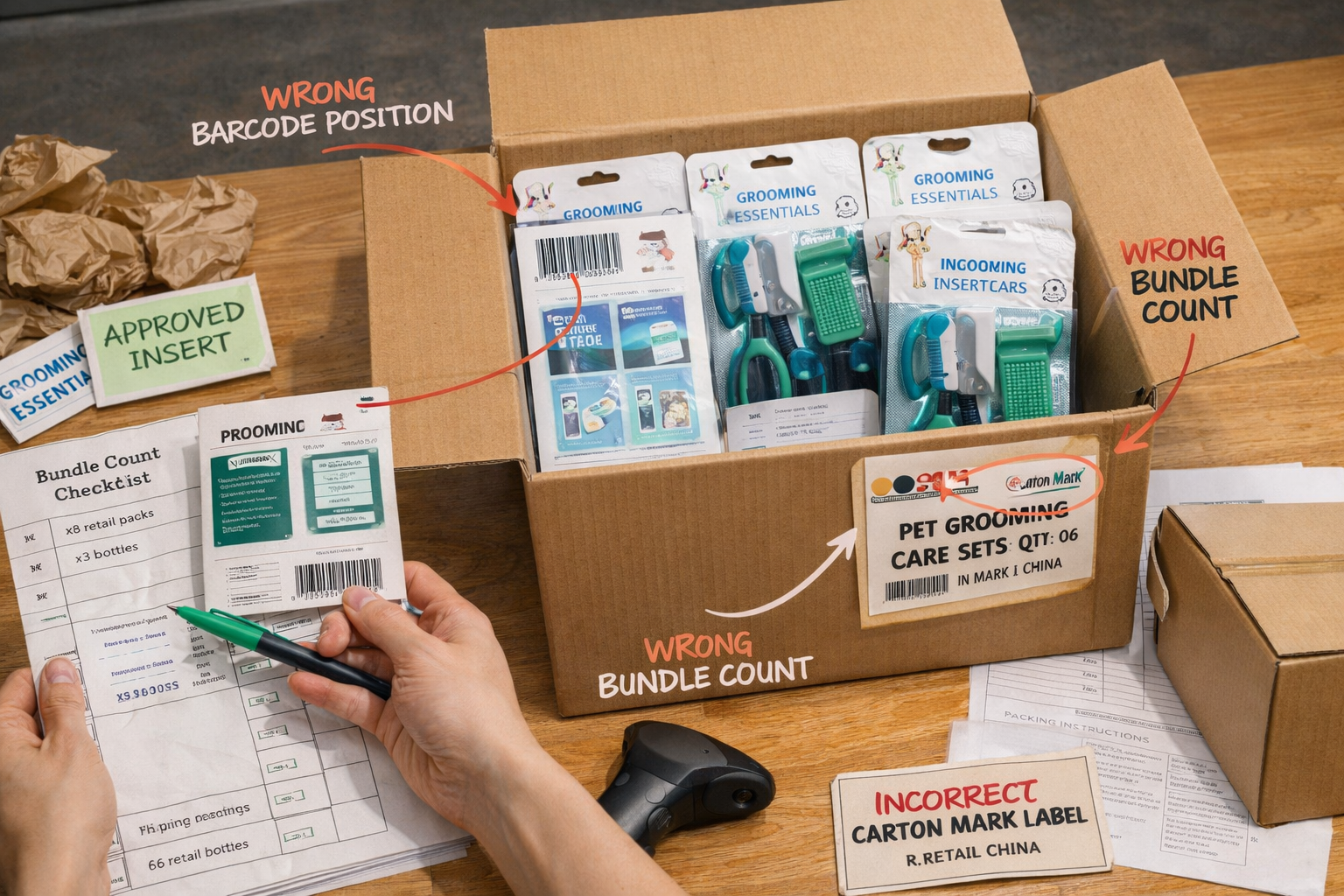
Risk 03
Packaging or shipment details are wrong even when products look acceptable
Barcode position, insert content, carton grouping, bundle count, or retail-facing presentation can still fail, even if the item itself is broadly acceptable.
Typical workflow when a buyer starts a pet supplies project
The best starting point is usually not a finished specification sheet. It is a clear buying direction plus the questions that still need answering.
Share the product direction or assortment idea
Send product links, target categories, quantity range, destination market, and whether you are building a retail assortment, e-commerce bundle, or replenishment plan.
Clarify what needs comparison before buying decisions are made
That may include product structure, material feel, size mapping, packaging format, bundle logic, or what the buyer needs to see before moving into samples or bulk planning.
Lock down the details that affect bulk output
These usually include final appearance, size range, tag or label position, insert cards, set count, and what the packed order should look like before shipment handoff.
Review packing status and shipment readiness before release
This is where many avoidable issues can still be caught, especially on mixed-SKU orders that need cleaner grouping, clearer cartons, and fewer fulfillment surprises.