FREE DOWNLOAD
QC Checklist for China Sourcing
Reduce defects, delays, and shipment rejections for multi-category sourcing: Kitchen & Home, Pet Supplies, Seasonal & Gifts.
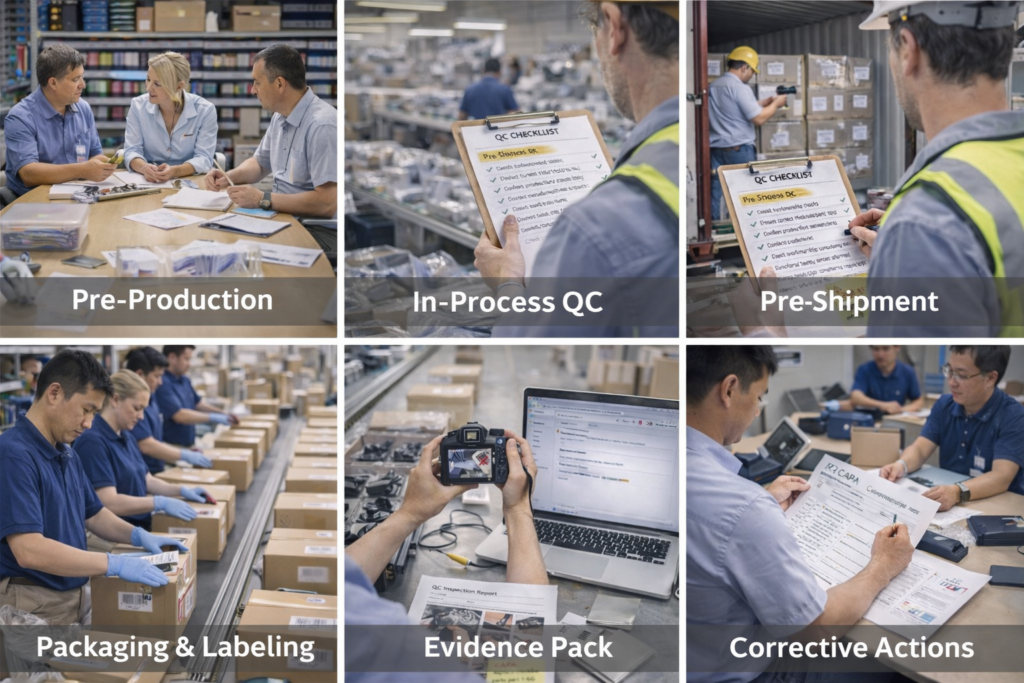
In-Process QC
Pre-Shipment
Packaging & Labeling
Evidence Pack
Corrective Actions
What you’ll get
- Inspection steps + pass/fail criteria
- Packaging & labeling checks (3PL/FBA-ready)
- Defect grading + corrective action workflow
- Evidence pack requirements (photos/videos)
Get the QC Checklist (PDF)
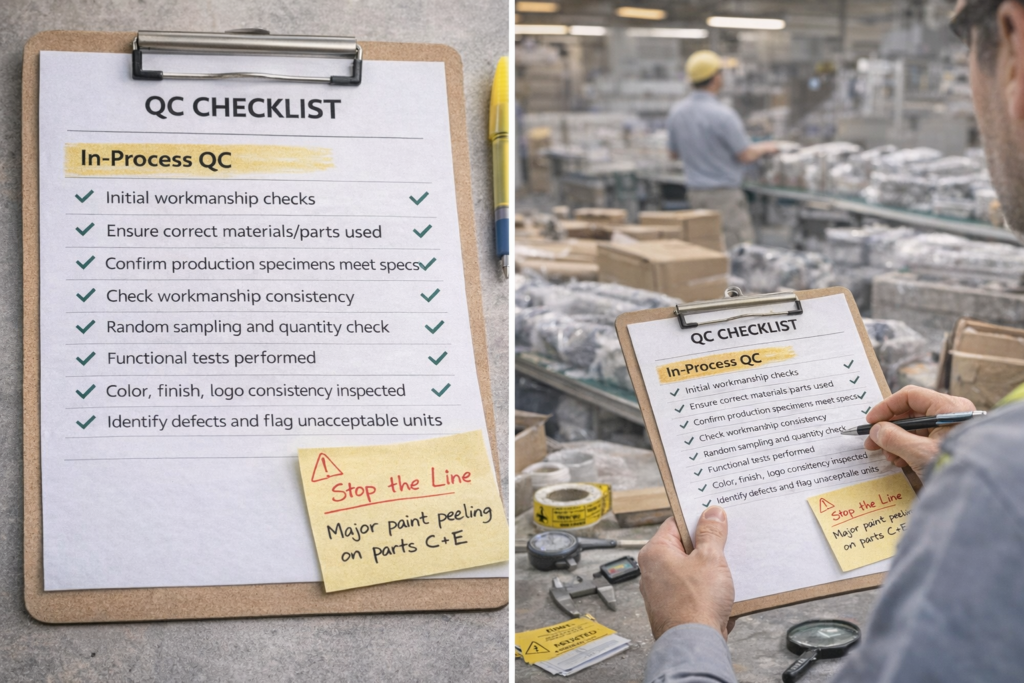
In-Process QC
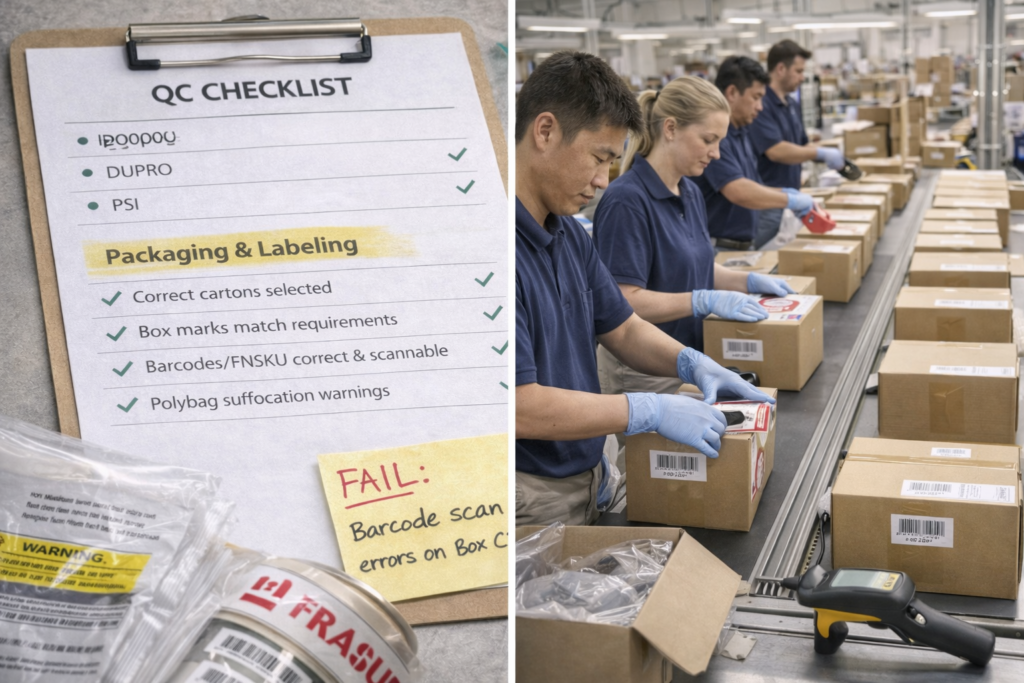
Packaging & Labeling
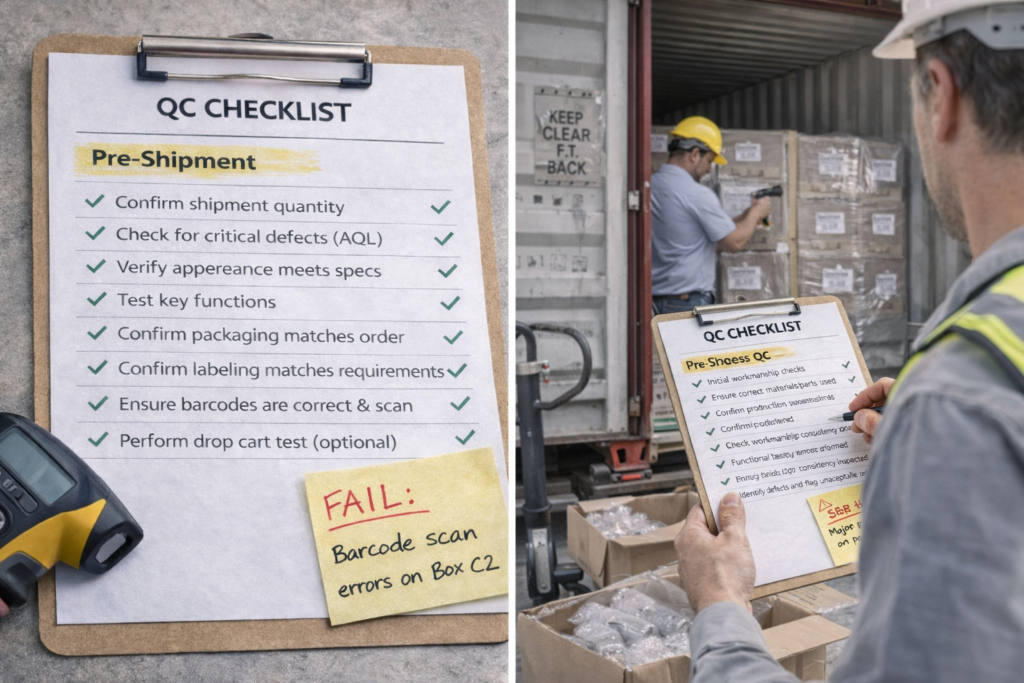
Pre-Shipment
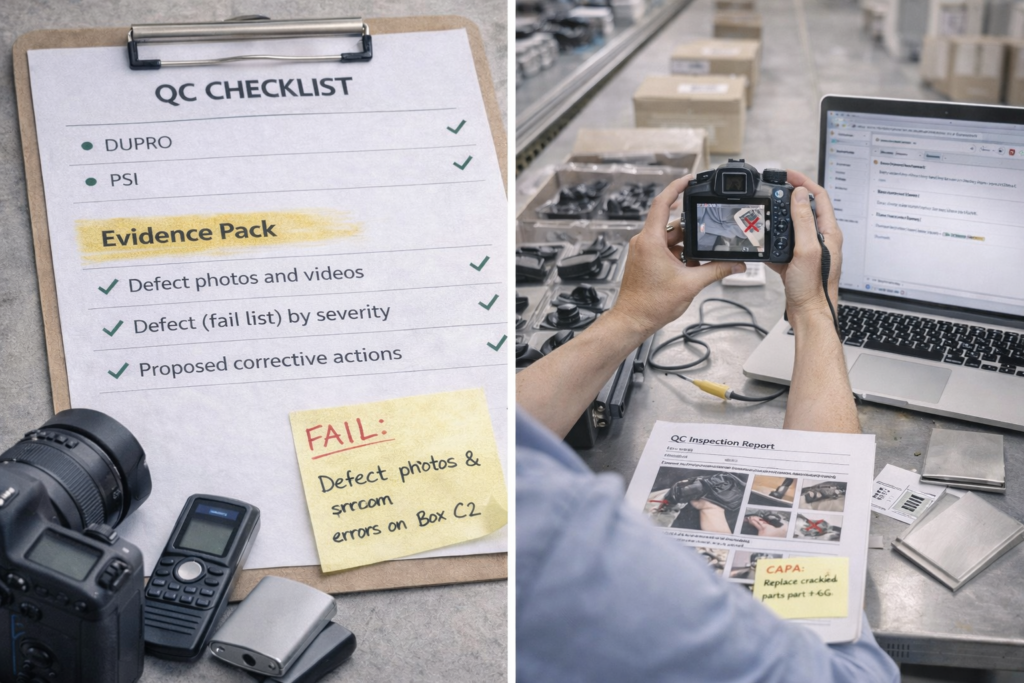
Corrective Actions
What’s Inside
A reusable checklist for every order, especially multi-supplier sourcing.
- Pre-Production: specs, golden sample, packaging rules
- DUPRO: workmanship and consistency checkpoints
- Packaging: carton marks, barcodes, polybags
- IQC: incoming checks, count, critical defect screen
- PSI: sampling reminders, function + appearance checks
- Evidence Pack: photos/videos, defect list, corrective actions
QC Checklist FAQ
Quick answers buyers search before placing orders in China.
What is a QC checklist?
The QC checklist is essential for ensuring that products meet the necessary standards before shipping. It helps identify issues early, saving time and cost involved in handling defects post-delivery.
Why is inspection important?
Inspections are crucial as they ensure that products are consistent with the agreed specifications and quality standards. They can prevent costly returns and dissatisfaction from buyers.
What is AQL in quality control?
AQL, or Acceptable Quality Level, refers to the maximum number of defective items that are considered acceptable during random sampling quality inspection. It helps balance risk and cost.
How are defects classified?
Defects can be classified into critical, major, and minor categories. This classification helps prioritize issues that need immediate attention versus those that can be resolved later.
What is QC for FBA shipments?
QC for FBA shipments involves ensuring products meet Amazon’s standards before they are shipped to their fulfillment centers. This can include inspections and proper documentation for each shipment.
How often should I perform inspections?
Performing inspections regularly can help maintain quality and catch defects early. Depending on the volume, some might need inspections for every batch, while others may do it less frequently.
Can I trust my supplier’s quality?
Trusting your supplier’s quality requires careful vetting and sometimes using third-party inspections. It’s always better to have an objective assessment before you commit to large orders.
What happens if defects are found?
If defects are found during inspections, you should address them immediately. Solutions may include reworking the product, negotiating returns, or ensuring replacements are sent.
Should I hire a third-party inspector?
Hiring a third-party inspector can provide peace of mind. They can offer an unbiased view of your products and help ensure compliance with quality standards.
What is the cost of inspections?
The cost of inspections can vary based on product type, quantity, and the specifics of the inspection. It’s worth budgeting for this as part of your overall sourcing strategy.