
What Does a China Sourcing Agent Actually Do From Supplier Search to Shipment?
A China sourcing agent does much more than find supplier names. A useful agent helps overseas buyers clarify product requirements, compare suppliers, review quotations, follow samples, control production risks, check quality, confirm packaging, collect photo evidence, coordinate warehouse handling, and prepare goods for shipment from China.
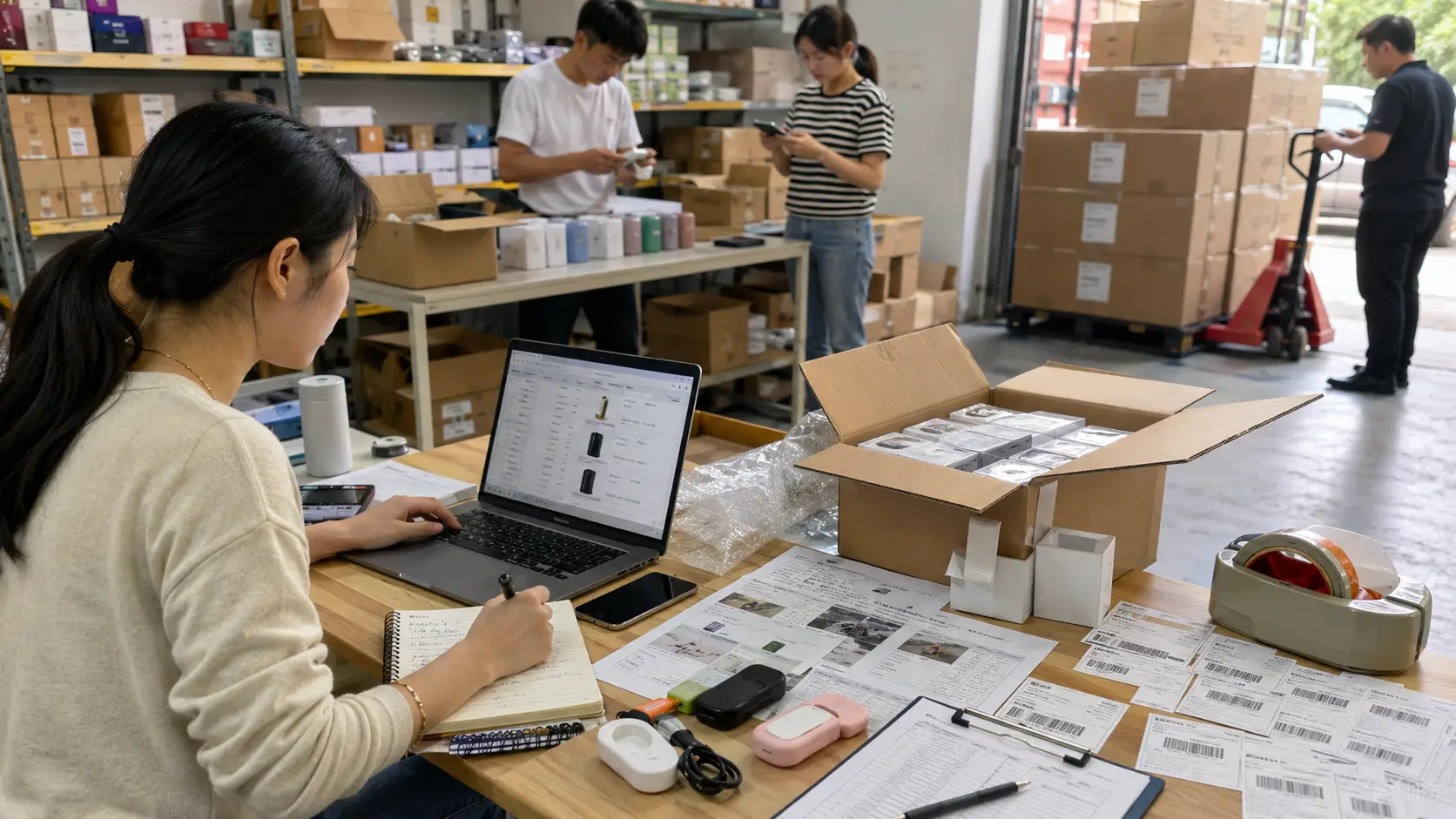
Quick Answer: What Does a China Sourcing Agent Do?
A China sourcing agent helps overseas buyers manage the sourcing process inside China. The work may include product requirement clarification, supplier research, supplier screening, quotation comparison, sample follow-up, order communication, quality control, packaging checks, warehouse coordination, consolidation, photo evidence, shipping handoff, and problem follow-up.
The best sourcing agents do not simply send buyer inquiries to random factories. They help buyers make safer decisions at each stage: which supplier to contact, what quote is complete, what sample details must be locked, what quality risks need to be checked, what photos should be reviewed before balance payment, and what shipment details must be confirmed before goods leave China.
Many buyers think a sourcing agent is just a person who finds cheaper suppliers in China. That is only a small part of the job. In real import projects, the bigger value is often coordination and risk control. A buyer may already have supplier names from Alibaba, Made-in-China, trade shows, or Google. But supplier names alone do not guarantee the right product, the right quote, the right sample, the right packaging, or the right shipment.
This is why buyers should understand the full workflow. A sourcing agent can be useful from the first supplier search all the way to shipment preparation, but only if the service scope is clear. Some agents only introduce suppliers. Others help manage supplier comparison, samples, QC, warehouse handling, evidence collection, and delivery coordination.
The Full China Sourcing Agent Workflow
A sourcing project usually moves through several stages. Each stage has different risks, and each stage requires different checks.
| Stage | What the sourcing agent does | Why it matters to buyers |
|---|---|---|
| Requirement clarification | Helps define product specs, materials, size, finish, packaging, MOQ, quality expectations, and target price. | Prevents suppliers from quoting different versions of the product. |
| Supplier search | Finds potential suppliers through platforms, factory networks, local markets, industry contacts, or existing supplier pools. | Gives the buyer more options than relying on one supplier or one online listing. |
| Supplier screening | Checks supplier role, product experience, communication quality, production capability, and order suitability. | Reduces the chance of choosing a supplier that looks good online but cannot handle the real order. |
| Quotation comparison | Compares material, MOQ, tooling, packaging, logo, inspection, Incoterms, and shipping assumptions. | Helps buyers avoid comparing incomplete prices. |
| Sample follow-up | Coordinates samples, checks details, records approval notes, and links samples to bulk production standards. | Reduces the risk that bulk goods differ from the approved sample. |
| Production follow-up | Tracks order progress, supplier updates, critical production points, and early problem signals. | Helps buyers find problems before the order is finished. |
| Quality and shipment checks | Supports inspection, defect records, packaging photos, label checks, carton marks, warehouse status, and shipping handoff. | Helps buyers decide whether to pay the balance and release shipment. |
A sourcing agent should not only help you find a supplier. A useful agent helps you control what happens after the supplier is found.
Why Buyers Need More Than a Supplier List
Supplier search is only the beginning. Many sourcing problems happen after the buyer thinks the hard part is already done. The supplier may quote a low price without including packaging. A sample may look good but lack written approval details. Production may start with the wrong material. Labels may be confirmed too late. Carton marks may be wrong. Goods may be shipped before the buyer sees enough evidence.
A sourcing agent is useful when the buyer needs local follow-up between these steps. Without local coordination, overseas buyers often rely only on supplier messages, selected photos, and vague promises. That can work for simple products, but it becomes risky for private label, multi-SKU, high-value, or quality-sensitive orders.
A buyer usually needs agent support when:
- The buyer cannot verify suppliers in China directly.
- Several suppliers need to be compared beyond unit price.
- The product requires customization, logo, packaging, or labeling.
- The buyer needs a sample to become a clear bulk production standard.
- Quality issues would be expensive after shipment.
- Multiple suppliers need warehouse receiving or consolidation.
- The buyer needs photo evidence before balance payment.
- Shipping preparation needs document, carton, label, or loading checks.
What a China Sourcing Agent Does Before and During Production
The early and middle stages of a sourcing project decide whether the order will be easy to control later. A sourcing agent should help buyers avoid vague requirements, weak suppliers, incomplete quotations, poor sample records, and production problems that become expensive after goods are finished.
1. Clarifying Product Requirements Before Supplier Search
A professional sourcing process should start before the first supplier is contacted. If the buyer’s requirement is unclear, suppliers will quote based on different assumptions, and the buyer may think one supplier is cheaper when the quote is simply incomplete.
A sourcing agent should help the buyer clarify the product details that affect supplier selection, price, quality, lead time, and packaging.
Key details to clarify include:
- Product category, use case, target market, and buyer type.
- Material, size, weight, color, finish, structure, and function.
- Required certifications, test reports, or compliance expectations.
- Target order quantity, acceptable MOQ, and future repeat order plan.
- Logo method, artwork requirements, and private label expectations.
- Retail packaging, barcode, warning label, insert card, and carton marks.
- Quality standard, defect tolerance, and inspection expectations.
- Shipping method, delivery destination, and Incoterms preference.
If buyers skip requirement clarification, they may receive many quotes that look comparable but are actually based on different products, materials, packaging, or shipping terms.
2. Finding and Screening Suppliers
Supplier search can include online platforms, local factory networks, product markets, trade show contacts, existing supplier databases, and referrals. But the real value is not only finding many names. The value is identifying which suppliers are suitable for the buyer’s project.
A sourcing agent may check:
- Whether the supplier is a factory, trading company, exporter, or product coordinator.
- Whether the supplier has real experience with the buyer’s product category.
- Whether the supplier can handle the required MOQ and customization.
- Whether the supplier gives precise answers or only general promises.
- Whether the supplier can provide relevant photos, sample cases, or production references.
- Whether the supplier accepts inspection, packaging checks, or pre-shipment evidence.
For buyers who are still at the supplier selection stage, NaviSourcing’s Sourcing-Procurement service helps turn broad supplier options into a more practical shortlist based on project fit, quotation logic, and sourcing risk.
3. Comparing Quotes Beyond Unit Price
Quote comparison is one of the most misunderstood sourcing tasks. Many buyers compare only unit price. A sourcing agent should compare what each supplier included in the price.
| Quote item | What buyers may miss | What the sourcing agent should clarify |
|---|---|---|
| Product material | Two suppliers may quote different grades or thicknesses. | Confirm material type, weight, finish, and performance expectations. |
| MOQ | A low MOQ may come with higher unit price or limited customization. | Check MOQ by color, size, model, packaging, and logo method. |
| Logo and customization | Logo cost, setup cost, mold cost, or artwork revision may be excluded. | Confirm logo method, position, color, sample fee, and setup charge. |
| Packaging | Retail box, barcode, insert card, and carton marks may not be included. | Confirm inner packaging, outer carton, labels, and shipping-ready packaging. |
| Inspection | Suppliers may not include inspection or correction responsibility. | Confirm inspection timing, defect standard, and correction process. |
| Shipping terms | EXW, FOB, CIF, DDP, and door-to-door quotes are not comparable. | Clarify Incoterms, port, destination, documents, and delivery responsibility. |
If packaging, inspection, labels, export cartons, tooling, or shipping assumptions are missing, the final cost may become higher later.
4. Coordinating Samples and Turning Samples Into Standards
A sample is not only a product to look at. It should become the reference for bulk production. A sourcing agent should help the buyer record sample details and make sure the supplier understands what must stay the same in the bulk order.
A good sample follow-up process should record:
- Sample version, supplier name, date, and approval status.
- Photos from multiple angles and key detail points.
- Measurements, color, material, finish, weight, and function.
- Logo position, logo size, artwork file, and printing method.
- Packaging method, label, barcode, carton mark, and accessories.
- Buyer comments, supplier correction notes, and final approval standard.
This step is important because many buyer complaints happen when the sample looks acceptable but bulk production is slightly different. A sourcing agent should help reduce that gap by turning approval into clear written production and QC points.
5. Following Production and Checking Risk Before It Is Too Late
After the order is confirmed, a sourcing agent may help follow production progress, request updates, check key milestones, and identify early warning signs. This does not mean the agent replaces the factory’s production manager. It means the agent helps the buyer avoid being blind during the production period.
Check whether the supplier prepared the right material, color, components, or packaging before mass production starts.
Request early photos or confirmation when the first finished units are available, especially for customized products.
Track whether production is on schedule and whether delay risks are appearing before the delivery date.
If a problem appears, record what happened, what correction was agreed, and whether the supplier actually fixed it.
If the project has quality or production risk, NaviSourcing’s Quality-risk-control service can help buyers define what needs to be checked before shipment, instead of waiting until goods are already shipped overseas.
6. Checking Quality Before Balance Payment
For many China orders, buyers pay a deposit before production and pay the balance before shipment. This makes the pre-shipment stage very important. A sourcing agent can help the buyer request inspection, review finished product evidence, check packaging, and decide whether the order is ready for balance payment.
Before paying the balance, buyers should check:
- Finished product appearance, color, material, size, and function.
- Defect examples and whether they are minor, major, or critical.
- Quantity, carton count, carton size, and gross weight.
- Packaging, barcode, label, warning mark, and carton mark photos.
- Correction evidence if defects were found.
- Shipping documents and supplier handoff plan.
This is where a sourcing agent can protect the buyer from approving shipment too early. The goal is not to create paperwork. The goal is to help the buyer make a payment and shipment decision based on evidence.
Need support from supplier search to pre-shipment checks?
NaviSourcing can help review your sourcing stage, supplier quotes, sample approval, QC points, packaging details, and shipment evidence before your order moves too far.
Red Flags That a China Sourcing Agent May Not Be Reliable
A reliable agent should help the buyer see more clearly. If an agent avoids details, hides supplier information, overpromises low prices, or cannot explain how quality and shipment risks are controlled, buyers should be careful before paying.
Common Red Flags Before You Pay
| Red flag | Why it matters | What buyers should ask instead |
|---|---|---|
| They promise the lowest factory price immediately | Low price without specification review may hide weaker material, missing packaging, or incomplete service. | Ask how quotes will be compared and what cost items are included. |
| They say sourcing is free | Free service may mean hidden supplier markup or supplier-side commission. | Ask how they make money and whether supplier prices are transparent. |
| They do not ask detailed product questions | Without specs, they cannot judge supplier fit or quote accuracy. | Ask what product details they need before supplier search. |
| They avoid sharing supplier information | The buyer may lose price visibility and supplier control. | Ask what supplier information can be shared and how supplier comparison will be reported. |
| They claim QC is included but cannot explain how | Simple photo forwarding is not the same as quality-risk control. | Ask for inspection timing, checklist items, defect examples, and correction follow-up method. |
| They ignore packaging and shipment details | Many real buyer losses happen from wrong labels, carton marks, weak cartons, and poor shipment preparation. | Ask whether packaging, labels, carton marks, warehouse receiving, and shipment evidence are checked. |
Questions to Ask a China Sourcing Agent Before Paying
Buyers do not need to interrogate an agent, but they should ask enough questions to understand whether the agent has a real process. The best answers are specific, practical, and tied to the buyer’s product.
Important questions include:
- How do you find suppliers for this product category?
- How do you decide whether a supplier is suitable?
- Can I see the supplier quote and your service fee separately?
- What exactly is included in your fee?
- What costs are not included?
- How do you compare supplier quotes beyond unit price?
- How do you record sample approval details?
- What quality checks can you help with before balance payment?
- What photo evidence will I receive before shipment?
- Can you check packaging, labels, barcodes, carton marks, and cartons?
- Can you help with warehouse receiving, repacking, or consolidation?
- How do you handle supplier delays, defects, or correction requests?
- Who is responsible if the supplier makes a mistake?
A reliable agent will not be offended by practical questions. They should welcome clear expectations because clear expectations reduce conflict later.
Simple Reliability Scorecard for Buyers
Buyers can use a simple scoring approach before paying. The goal is not to find a perfect agent, but to avoid working with someone who cannot explain the basic sourcing process.
| Check area | Reliable sign | Risk sign |
|---|---|---|
| Product understanding | Asks detailed questions before quoting. | Promises fast sourcing without asking product details. |
| Fee model | Explains fee, scope, exclusions, and payment timing. | Uses vague words like “free” or “best price” without a breakdown. |
| Supplier screening | Explains how suppliers are found, compared, and rejected. | Only says they have many factories. |
| Quote review | Compares material, MOQ, packaging, logo, inspection, and shipping terms. | Only compares unit price. |
| Quality control | Explains inspection timing, checklist, defect records, and correction follow-up. | Only promises “we will check” without details. |
| Evidence | Provides product, packaging, carton, label, warehouse, and shipment photos when needed. | Relies only on supplier messages. |
| Problem handling | Explains what happens if supplier delays, defects, or wrong packaging occur. | Promises there will be no problems. |
What a Reliable Agent Should Provide Before the Project Starts
Before the buyer pays, a reliable sourcing agent should provide enough clarity for the buyer to understand the working relationship. This does not need to be complicated, but it should be specific.
Buyers should expect:
- A clear explanation of service scope.
- A fee model and payment terms.
- A list of included and excluded tasks.
- A basic sourcing workflow.
- A supplier search and comparison method.
- A sample follow-up method if samples are needed.
- A quality-control or evidence plan before shipment.
- A clear communication channel and response expectation.
- A problem follow-up method if suppliers fail to meet agreed terms.
Good sourcing support is not based on promises alone. It should be based on process, documentation, supplier comparison, quality checks, packaging confirmation, evidence, and practical follow-up.
Final Recommendation: Trust the Process, Not the Promise
A reliable China sourcing agent should make sourcing decisions easier, not more hidden. Before paying, buyers should check whether the agent can explain how suppliers are selected, how quotes are compared, how samples are controlled, how quality is checked, how packaging is confirmed, how evidence is collected, and how shipment is coordinated.
The best agent is not always the cheapest one. The best agent is the one who helps the buyer reduce blind spots before money, production, packaging, and shipment decisions are made.
Want to check your sourcing risk before moving forward?
NaviSourcing helps overseas buyers review suppliers, quotes, samples, QC points, packaging details, warehouse needs, and shipment evidence before an order becomes difficult to correct.
FAQ: How to Check If a China Sourcing Agent Is Reliable
How do I know if a China sourcing agent is reliable?
A reliable China sourcing agent should explain their fee model, service scope, supplier selection process, quotation comparison method, quality-control support, packaging checks, photo evidence, and shipment coordination clearly before you pay.
What is the biggest red flag when choosing a sourcing agent?
One major red flag is vague transparency. If the agent cannot explain how they charge, how suppliers are selected, what is included, or how quality and shipment risks are checked, buyers should be careful.
Should I choose the cheapest sourcing agent?
Not always. A low fee can become expensive if the agent hides supplier markup, skips quality checks, ignores packaging details, or does not help solve problems before shipment.
Should a sourcing agent share supplier information?
This depends on the service model, but buyers should understand whether supplier information, supplier quotes, and agent fees are transparent. If everything is hidden, price and decision control may become weaker.
Can a sourcing agent inspect goods before shipment?
Some sourcing agents support inspection or coordinate quality checks. Buyers should ask what inspection method, photo evidence, defect record, and correction follow-up are included.
What should I ask before paying a sourcing agent?
Ask how they find suppliers, how they compare quotes, how they charge, what is included, how samples are handled, how QC is done, what evidence you receive, and how problems are followed up.
Is a free sourcing agent safe?
A free sourcing agent may still earn money through supplier-side commission or hidden markup. Buyers should ask how the agent earns money and whether supplier prices are transparent.
Can I use a sourcing agent after finding suppliers on Alibaba?
Yes. A sourcing agent can help review Alibaba suppliers, compare quotes, check missing details, follow samples, define QC points, request photo evidence, and coordinate shipment preparation.
What makes a sourcing agent different from a middleman?
A middleman may only resell supplier access or add markup. A useful sourcing agent helps the buyer control supplier selection, quotes, samples, quality, packaging, warehouse handling, and shipment evidence.
When should I not pay a sourcing agent yet?
Do not rush to pay if the agent cannot explain service scope, fee structure, supplier screening method, quality-control process, evidence plan, or what happens if suppliers make mistakes.
