
How Much Does a China Sourcing Agent Cost? Fees, Commission, and What Buyers Should Check
A China sourcing agent may charge a commission, flat project fee, hourly fee, service package, or hidden margin inside the supplier price. The real question is not only “How much does the agent charge?” but “What does the fee include, what is excluded, and does the agent help reduce sourcing risk before payment, production, and shipment?”
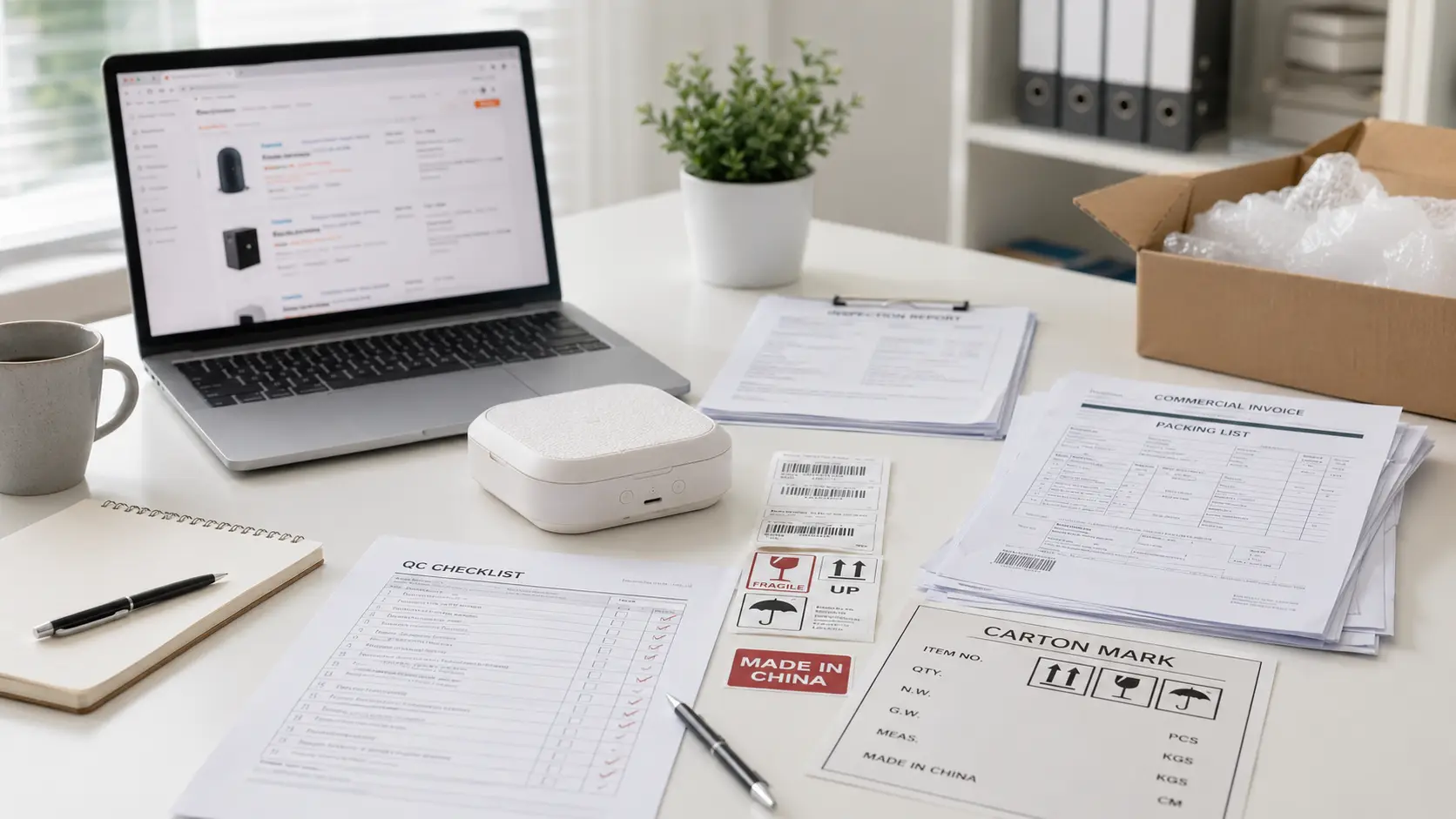
Quick Answer: How Much Does a China Sourcing Agent Cost?
Many China sourcing agents charge a commission based on the order value, often somewhere around 3% to 10% depending on the order size, product complexity, and service scope. Some agents charge a flat project fee, a monthly fee, an hourly fee, or a fixed service package. Others may not show a clear fee but instead add an undisclosed margin to the supplier price.
For import buyers, the safest way to evaluate cost is not to ask for the lowest percentage only. Buyers should ask what the fee includes: supplier search, quote comparison, sample follow-up, factory communication, quality control, photo evidence, packaging checks, warehouse handling, consolidation, and shipping coordination.
Buyers usually search this question when they are close to hiring a sourcing agent but unsure whether the cost is reasonable. They may have already found suppliers on Alibaba, received quotes from several factories, or planned a first bulk order from China. At this stage, the buyer is not only looking for a number. They are trying to understand whether paying an agent will reduce risk or simply add another layer of cost.
That is the right concern. A sourcing agent can be valuable when the agent helps the buyer avoid wrong suppliers, incomplete quotations, poor samples, weak production control, packaging mistakes, missing labels, shipment delays, or hidden supplier problems. But a sourcing agent can also become risky if the fee structure is unclear, the supplier price is not transparent, or the agent earns money from both sides without telling the buyer.
Common China Sourcing Agent Fee Models
There is no single standard price for all sourcing agents. The fee model usually depends on the agent’s business type, project size, product category, and how much work the buyer expects the agent to handle.
| Fee model | How it works | Best for | Buyer risk to check |
|---|---|---|---|
| Commission | The agent charges a percentage of the order value, often after the buyer places an order. | Ongoing sourcing, repeat orders, and projects where the agent supports the whole buying process. | Check whether the commission is based on product cost, FOB value, total invoice value, or landed cost. |
| Flat project fee | The buyer pays a fixed amount for a defined sourcing task or project stage. | One-time supplier search, quote comparison, sample coordination, or project review. | Check exactly what is included and what happens if the first supplier list is not suitable. |
| Hourly or daily fee | The agent charges based on time spent on supplier research, factory visits, inspections, or coordination. | Research-heavy work, factory visits, audits, or specific local tasks. | Check time records, deliverables, and whether the work has a clear outcome. |
| Service package | The agent offers a packaged service, such as sourcing plus QC, warehouse receiving, photo evidence, or shipping coordination. | Buyers who need a controlled process rather than only supplier names. | Check whether QC, packaging checks, labels, warehouse work, and shipping support are truly included. |
| Hidden markup | The agent does not show a clear service fee but adds margin inside the supplier price. | Sometimes used by middlemen or agents who do not want to disclose the factory price. | High risk if the buyer cannot see the real supplier price or compare alternatives transparently. |
A clear 5% fee may be safer than a “free” sourcing service that hides a 15% markup inside the product price. The most important question is whether the agent’s fee and supplier price are transparent.
What Affects the Cost of a China Sourcing Agent?
Two buyers can receive very different service fees because their projects are not the same. Sourcing a standard stock item is different from managing a customized private label product with packaging, labels, inspection, warehouse consolidation, and DDP shipping.
The sourcing agent cost usually changes based on:
- Product complexity and whether customization is required.
- Order value and repeat order potential.
- Number of suppliers to compare or manage.
- Whether samples need to be collected, checked, or consolidated.
- Whether the agent supports quality control or only supplier search.
- Packaging, barcode, carton mark, label, or private label requirements.
- Warehouse receiving, repacking, sorting, or consolidation needs.
- Shipping coordination, export documents, or DDP-style delivery support.
- How much evidence the buyer needs before payment or shipment.
This is why a simple percentage can be misleading. A 3% commission that only gives you supplier names is not the same as a 6% commission that includes supplier screening, quotation review, sample follow-up, QC coordination, packaging checks, photo evidence, and shipment preparation.
How to Compare Sourcing Agent Fees Without Choosing the Wrong Option
A buyer should never compare sourcing agents by percentage alone. The same 5% fee can mean very different things depending on whether the agent only introduces suppliers or also helps with supplier verification, sample tracking, quality control, packaging checks, warehouse coordination, and shipment evidence.
Commission-Based Fees: Simple, But Not Always Transparent
Commission-based fees are common because they are easy to understand. The agent charges a percentage of the purchase order or supplier invoice value. For example, if the buyer places a $20,000 order and the agreed commission is 5%, the service fee would be $1,000.
This model can work well when the buyer and agent agree clearly on the calculation base and service scope. The problem starts when the buyer does not know whether the percentage is calculated on EXW price, FOB price, total invoice value, international shipping, or landed cost.
Before accepting a commission model, ask:
- Is the commission based on product cost only, FOB value, total supplier invoice, or landed cost?
- Does the buyer see the original supplier quotation?
- Is the commission added separately or hidden inside the product price?
- Does the commission include supplier search, quotation review, sample follow-up, QC, packaging checks, and shipment support?
- Does the percentage change when the order value increases?
- Are repeat orders charged at the same rate?
If the supplier price is inflated or important services are excluded, a low visible commission can still become expensive.
Flat Fees: Clear Price, But Scope Must Be Defined
A flat fee can be helpful when the buyer needs a specific task, such as supplier research, quote comparison, sample coordination, factory visit, product review, or order risk check. The advantage is that the buyer knows the service cost upfront.
However, a flat fee only works well when the deliverables are specific. If the agent says “supplier sourcing service” but does not define how many suppliers will be checked, what information will be verified, or what report the buyer will receive, the buyer may still be disappointed.
A flat fee should clearly state:
- The exact task or project stage covered.
- How many suppliers, quotes, samples, or product options will be reviewed.
- Whether the agent will contact suppliers or only research online.
- Whether quote comparison includes material, packaging, MOQ, tooling, and shipping assumptions.
- Whether the buyer receives a written summary, supplier shortlist, or risk report.
- What happens if the first supplier list is not suitable.
Hidden Markup: The Fee Buyers Often Do Not See
Hidden markup is one of the most important cost risks. Some sourcing agents or middlemen do not charge a visible service fee. Instead, they add margin to the factory price and present the final price to the buyer as if it were the supplier’s direct quote.
This can create a conflict of interest. If the buyer cannot see the original supplier price, the agent may be rewarded for increasing the product price rather than helping the buyer get a fair quote.
The buyer sees supplier quotes, understands the agent fee, and can compare service cost against value delivered.
The buyer does not know the supplier price, does not know the agent margin, and may overpay without realizing it.
This does not mean every markup is dishonest. Some companies operate as trading companies, take product responsibility, and sell at a quoted product price. That can be acceptable if the buyer understands the business model. The problem is when the agent presents itself as a buyer-side sourcing agent while secretly earning from supplier markup.
What Should Be Included in a Fair Sourcing Agent Fee?
A fair sourcing fee should match the work required. If the agent only sends supplier links, the fee should be different from an agent who reviews quotations, follows samples, checks quality, coordinates warehouse handling, and supports shipment.
| Service area | Basic agent may include | Fuller support may include |
|---|---|---|
| Supplier sourcing | Supplier list and basic contact information. | Supplier comparison, business role check, product experience review, and risk notes. |
| Quotation review | Collecting prices from suppliers. | Checking material, MOQ, packaging, logo, tooling, inspection, Incoterms, and hidden assumptions. |
| Sample follow-up | Requesting samples from suppliers. | Tracking sample details, photos, measurements, packaging, approval notes, and sample-to-bulk standards. |
| Quality control | Supplier says goods are ready. | Inspection planning, defect records, correction follow-up, and pre-shipment evidence. |
| Packaging and labels | Supplier confirms packaging by message. | Checking barcodes, labels, carton marks, retail boxes, inserts, and shipment-ready packaging. |
| Warehouse handling | Not included or handled by supplier only. | Receiving, sorting, repacking, labeling, consolidation, and final carton status checks. |
| Shipment support | Supplier provides basic shipping information. | Shipping plan review, document check, loading evidence, DDP coordination, and handoff follow-up. |
NaviSourcing’s Sourcing-Procurement service focuses on supplier search, quote comparison, and early project clarification. When buyers need more than supplier names, services such as Quality-risk-control and Photo-evidence-pack help turn the fee into visible risk control rather than only sourcing coordination.
Sample Cost Scenarios for Import Buyers
The examples below are not fixed prices. They show how buyers should think about cost based on project scope.
| Buyer situation | Likely service need | What the buyer should compare |
|---|---|---|
| First-time buyer testing a simple product | Supplier search, quote review, sample coordination. | Flat fee or small project fee may be more suitable than full commission. |
| Private label buyer placing a bulk order | Supplier screening, sample approval, packaging, QC, photo evidence. | Commission or service package should include clear order control steps. |
| Amazon or retail buyer | Barcode, carton labels, packaging, warehouse receiving, shipment prep. | Check whether labeling and warehouse work are included or charged separately. |
| Multi-supplier order | Receiving, sorting, repacking, consolidation, shipment planning. | Compare warehouse handling fees, consolidation fees, and shipment support scope. |
| High-value or quality-sensitive order | Supplier verification, production follow-up, inspection, correction evidence. | Do not choose only by lowest fee; compare inspection responsibility and risk control. |
Not sure if a sourcing agent fee is reasonable?
Send NaviSourcing your product details, supplier quotes, order size, packaging requirements, and current buying stage. We can help you understand which services are actually needed before you commit.
What Import Buyers Should Check Before Paying a China Sourcing Agent
Before paying an agent, buyers should confirm the pricing model, service scope, supplier price transparency, quality responsibility, communication process, and what evidence will be delivered at each sourcing stage.
Red Flags in China Sourcing Agent Fees
A sourcing agent fee is not automatically good or bad because it is high or low. The real risk is unclear pricing. If the buyer does not know who earns what, what the agent is responsible for, or what deliverables will be provided, the sourcing project can become difficult to control.
Be careful if an agent:
- Refuses to explain how the fee is calculated.
- Says the service is “free” but does not show the real supplier price.
- Will not disclose whether they receive supplier-side commission or rebates.
- Charges a very low fee but excludes supplier verification, sample tracking, QC, and shipment checks.
- Pushes you to pay the supplier quickly before specifications are confirmed.
- Does not provide written service scope or deliverables.
- Cannot explain what happens if goods fail inspection.
- Does not separate sourcing service fee from product cost, warehouse cost, or shipping cost.
Buyers should understand what the agent will do before supplier payment, during production, before balance payment, and before shipment release.
Questions to Ask Before You Accept a Sourcing Agent Fee
These questions help buyers compare sourcing agents more fairly and avoid hidden cost surprises.
| Question | Why buyers should ask |
|---|---|
| How do you charge: commission, flat fee, package fee, or markup? | Buyers need to understand the pricing model before comparing agents. |
| Will I see the original supplier quotation? | This helps buyers know whether the agent is transparent about supplier price. |
| What exactly is included in your service fee? | A fee is only meaningful when the buyer knows the service scope. |
| Does the fee include sample follow-up and sample checking? | Samples are often where buyer expectations first need to be locked. |
| Does the fee include QC or only supplier communication? | Supplier search without quality control may not reduce production risk. |
| Do you check packaging, labels, barcodes, and carton marks? | Packaging mistakes can delay shipment, cause warehouse rejection, or damage resale plans. |
| What evidence will I receive before paying the balance? | Buyers need product, packaging, label, carton, and inspection evidence before shipment. |
| Are warehouse handling and shipping coordination included? | Receiving, repacking, consolidation, and shipping support may be charged separately. |
| What happens if the supplier has problems? | Buyers need to know whether the agent only reports problems or helps follow corrections. |
How to Decide Whether the Fee Is Worth It
A sourcing agent fee is worth it when the agent reduces more risk and workload than the cost they add. This is especially true when the buyer does not have local staff in China, cannot inspect goods directly, or needs several suppliers to deliver into one controlled shipment.
The fee is usually easier to justify when:
- The order value is high enough that one mistake would be expensive.
- The product has quality, material, size, color, or function risk.
- The supplier comparison is confusing or quotes are not based on the same specification.
- The buyer needs private label packaging, barcodes, labels, inserts, or carton marks.
- The buyer needs quality checks before balance payment.
- Multiple suppliers need to be coordinated and consolidated.
- The buyer needs photo evidence before shipment approval.
- Shipping documents, warehouse handoff, or DDP-style delivery require closer control.
For simple, low-value, standard products, a full-service sourcing agent may not be necessary. For more complex orders, the right agent fee can function like risk insurance: not because it guarantees that nothing will go wrong, but because it helps identify problems earlier while there is still time to correct them.
Where Sourcing Agent Cost Connects With QC, Warehouse, and Shipping
Many buyers think sourcing agent cost only relates to supplier search. In real projects, the cost often connects with later stages: sample control, production follow-up, QC, packaging confirmation, warehouse handling, and shipment release.
For example, an agent may find a supplier at a good price, but if nobody checks the goods before shipment, the buyer may still receive defective products. The same is true for labels, barcodes, carton marks, and packaging. A sourcing fee that includes order control can be more valuable than a cheaper sourcing-only fee.
If your order involves repacking, sorting, labeling, or multi-supplier consolidation, NaviSourcing’s Warehouse-value-added service can support the execution stage in China. If the project also needs shipment planning, document checks, or delivery coordination, Shipping-delivery helps connect sourcing work with the final delivery plan.
Do not choose a sourcing agent only by the lowest fee. Choose by transparency, service scope, supplier price access, quality control process, evidence before payment, and accountability when problems appear.
Conclusion: A Good Sourcing Agent Fee Should Make the Buying Process Clearer
A China sourcing agent may charge by commission, flat fee, project fee, package fee, or margin. None of these models is automatically right or wrong. The key is whether the buyer understands the calculation, sees what is included, and receives enough support to reduce sourcing risk.
For import buyers, the cheapest fee is not always the best choice. A very low fee may exclude the most important work: supplier verification, quotation review, sample control, QC, packaging checks, warehouse coordination, and shipment evidence. A higher but transparent fee may be more reasonable if it gives the buyer better control before payment and shipment.
The best question is not only “How much does a China sourcing agent cost?” The better question is: “What risk does this fee help me control before I pay, produce, pack, and ship?”
Need help understanding sourcing cost before you commit?
NaviSourcing can review your supplier quotes, product requirements, packaging needs, QC points, warehouse handling, and shipping plan so you can understand what level of sourcing support is actually needed.
FAQ: China Sourcing Agent Cost
How much does a China sourcing agent usually charge?
Many China sourcing agents charge a commission based on order value, often around 3% to 10% depending on product complexity, order size, and service scope. Some agents charge flat project fees, hourly fees, monthly retainers, or service packages.
Is a 5% sourcing agent fee reasonable?
A 5% fee can be reasonable if it includes meaningful work such as supplier screening, quote comparison, sample follow-up, quality control, packaging checks, and shipment support. It may not be reasonable if the agent only forwards supplier names.
Is a sourcing agent cheaper than buying directly from Alibaba?
Buying directly from Alibaba may look cheaper because there is no visible service fee. However, direct buying can create hidden costs if the buyer chooses the wrong supplier, approves unclear specifications, misses quality issues, or ships goods with packaging mistakes.
Do China sourcing agents add hidden markup?
Some agents or middlemen may add hidden markup inside the supplier price. Buyers should ask whether they can see original supplier quotations and whether the agent receives any supplier-side commission, rebate, or margin.
Should I choose a commission or flat fee sourcing agent?
A commission model may work for ongoing orders or full-process sourcing. A flat fee may work for specific tasks such as supplier research, quote comparison, sample coordination, or project review. The best choice depends on scope and transparency.
What should be included in a sourcing agent fee?
A useful sourcing agent fee may include supplier search, supplier screening, quotation review, sample follow-up, order communication, QC coordination, packaging checks, photo evidence, warehouse handling, and shipment support, depending on the agreed service scope.
Why do sourcing agent fees vary so much?
Fees vary because sourcing projects vary. A simple stock product requires less work than a private label order with multiple suppliers, samples, packaging, QC, warehouse consolidation, labels, and international shipping coordination.
Can a sourcing agent fee save money?
Yes, if the agent helps avoid wrong suppliers, incomplete quotes, defective goods, poor packaging, relabeling costs, shipment delays, or unusable inventory. The fee should be compared with the risk it helps reduce.
What is the biggest red flag in sourcing agent pricing?
The biggest red flag is unclear pricing. Buyers should be cautious if an agent refuses to explain how they charge, hides supplier prices, claims the service is free, or does not define what deliverables are included.
Should first-time importers pay for a sourcing agent?
First-time importers may benefit from a sourcing agent when they are moving from samples to bulk orders, dealing with private label products, comparing confusing quotes, or unsure what to check before paying a supplier.
