
How Sourcing from China Actually Works for First-Time Import Buyers
A practical beginner’s guide to how China sourcing really works—from supplier search and quotations to samples, quality control, packaging checks, warehouse coordination, and shipment handoff.
If you are buying from China for the first time, the biggest mistake is assuming the process begins with price and ends with shipment. In reality, a sourcing project includes supplier fit, quotation logic, sample confirmation, production follow-up, packaging checks, label verification, warehouse coordination, and shipment handoff. This guide explains the full sourcing flow in plain language so first-time import buyers can understand what happens at each stage and where common mistakes begin.
Key Takeaways for First-Time Buyers
- Sourcing from China is more than finding a supplier. It includes quotation comparison, sample confirmation, quality checks, packaging review, and shipment handoff preparation.
- A quote is only useful if the supplier understands the same project assumptions. Unit price alone is not enough.
- Many sourcing failures happen after the sample stage, not before it. Bulk production, packaging, labels, and warehouse handling can still go wrong.
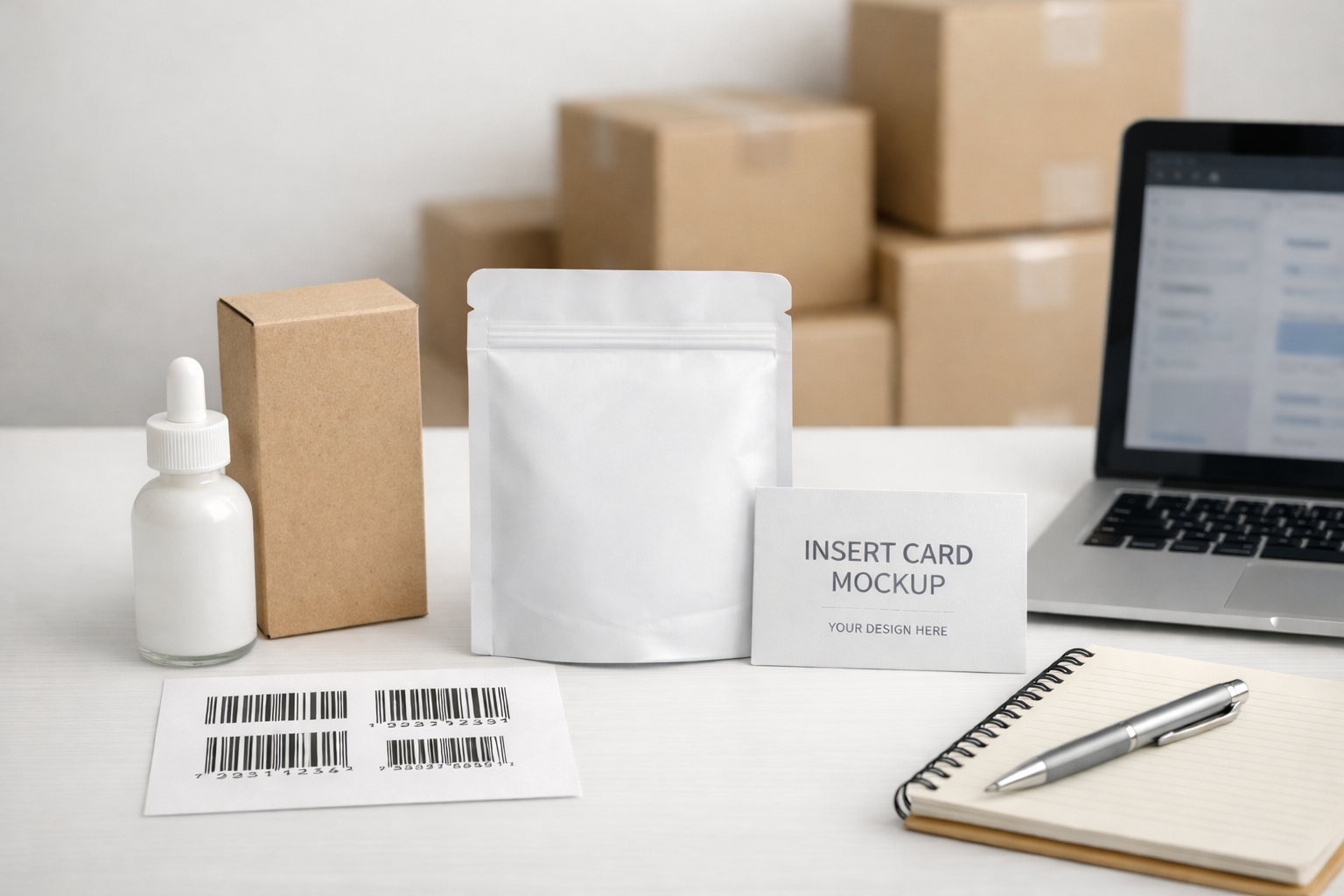
- Finished goods are not always shipment-ready. Barcode placement, insert cards, carton marks, and destination requirements still need checking.
- The right first question is not “Who is cheapest?” but “Who can execute this project correctly?”
Table of Contents
- What “sourcing from China” actually includes
- Why new buyers often misunderstand the process
- The real goal is not just to get a quote
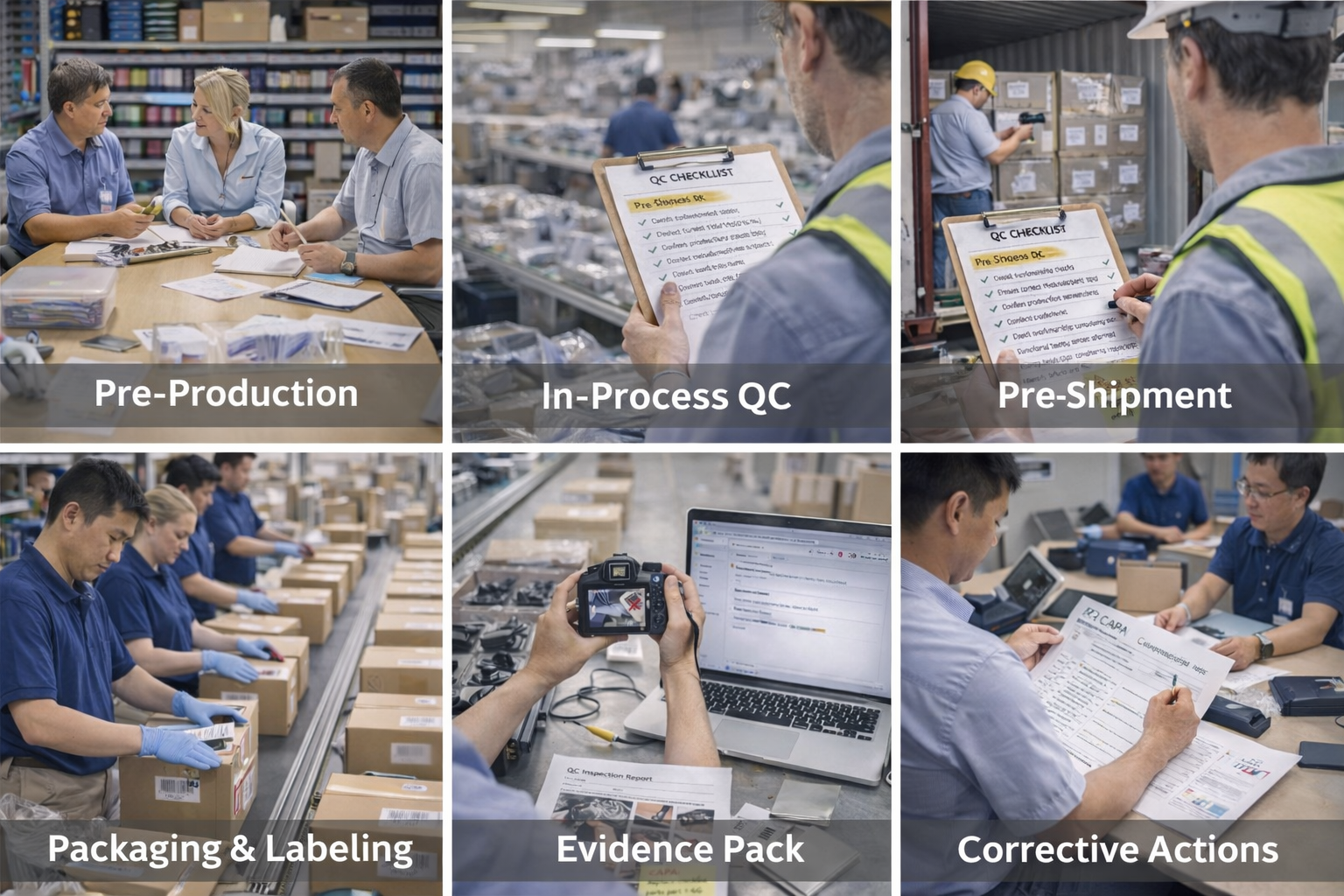
- The 7 stages of a typical sourcing project
- Who is involved in a sourcing project
- Where first-time buyers usually make mistakes
- What buyers should prepare before asking for quotes
- When a sourcing agent makes sense
- Why this matters more than many beginners expect
- FAQs for first-time import buyers
For many first-time import buyers, sourcing from China sounds straightforward.
Find a supplier. Ask for a quote. Approve a sample. Place the order. Ship the goods.
That is how the process often looks from the outside. In real projects, however, sourcing is rarely that simple. A quotation is not the true beginning of the job, and production is not the real end of it. Between those two points, there are many stages that affect whether the project moves smoothly or quietly builds risk.
A supplier may respond quickly but misunderstand the product requirement. A sample may look acceptable, but the bulk order may still drift. The goods may be finished, but packaging, labels, inserts, carton marks, or final warehouse instructions may still be wrong. A shipment may leave on time, but the receiving side may still face problems if key details were not confirmed before handoff.
This guide is written for buyers who want a clear view of the full process, from the first supplier conversation to the point where the goods are truly ready to move forward.
Who this guide is for
This article is for first-time import buyers, small brands preparing their first production order, ecommerce sellers moving from simple reselling to custom or private label products, and buyers who know the product they want but do not yet understand how the sourcing process really works.
It is not written as a factory brochure or a generic introduction. It is meant to help buyers understand the real workflow, the common failure points, and the questions that should be asked before money and time are committed.
What “sourcing from China” actually includes
Many buyers think sourcing only means finding a manufacturer. That is only one part of the process.
In practice, a sourcing project usually includes several connected stages: defining the product requirement, choosing the right sourcing path, requesting and comparing quotations, reviewing samples, confirming key specifications, following production, checking product quality, verifying packaging and labels, preparing warehouse or consolidation handling when needed, and confirming shipment handoff details before goods leave China.
That means sourcing is not simply about locating someone who says “yes, we can make it.” It is about making sure the project can be executed correctly from beginning to end.
A supplier may be technically able to produce an item, but still not be the right fit for the job. The issue may not be the product itself. The issue may be unclear quotation assumptions, weak communication, poor understanding of packaging requirements, lack of control over mixed-SKU orders, failure to verify labels or carton marks, or poor coordination before shipment handoff.
Why new buyers often misunderstand the process
The biggest reason first-time buyers struggle is that they tend to focus on the visible parts of the order: the product photo, the quoted price, the sample, the lead time, and the shipping date.
But many important decisions sit underneath those visible milestones.
- Did the supplier quote the same material you had in mind?
- Did the quotation include retail packaging or only bulk packing?
- Did anyone confirm the barcode position before mass production?
- Was the insert card content finalized?
- Were carton marks aligned with the shipping plan?
- Were destination warehouse requirements considered before final packing?
These questions often feel secondary at the beginning. Later, they become the exact reason a project turns stressful. A product can be broadly acceptable and still create serious problems if the packaging format is wrong, the labeling is incomplete, the carton grouping is inconsistent, or the goods are not prepared for the next warehouse or shipment stage.
The real goal is not just to get a quote
A lot of first-time buyers treat quotation as the first meaningful milestone. That is understandable. Price feels concrete. It creates momentum. It gives the impression that the project is moving forward.
But the real goal is not to get a quote. The real goal is to get a quote that means something.
A useful quotation is one that is based on enough shared understanding that buyers can compare suppliers fairly and make a decision with confidence.
One supplier may quote based on standard material, simple master carton packing, no insert card, no barcode sticker, a higher MOQ structure, and no special handling before shipment. Another supplier may quote based on upgraded material, retail packaging, printed insert, labeling included, a different production assumption, and extra preparation for warehouse or FBA delivery.
Both quotes may look like they are for the same product. In reality, they may represent different versions of the project.
The 7 stages of a typical sourcing project
The easiest way to understand sourcing from China is to break it into stages. Not every project looks exactly the same, but most follow a similar structure.
Stage 1: Define the product clearly
Every sourcing project begins with a product idea, but an idea is not enough for a useful RFQ. Buyers do not always need a perfect technical specification sheet at the beginning, but they do need enough clarity to reduce misunderstandings.
- Product photos, sketches, or reference links
- Approximate size or dimensions
- Material preference
- Color expectations
- Logo or branding requirements
- Estimated quantity range
- Packaging expectations
- Destination market and timing goals
This stage matters because vague requirements create vague quotes.
Stage 2: Choose the right sourcing path
The earlier question is not automatically “which factory should I contact?” It is: what sourcing path fits this project best?
Buying direct from a factory can work well when the product is straightforward. Working with a trading company can help when buyers value broader range or easier front-end communication. Working with a sourcing agent or sourcing coordination team often makes sense when the project involves supplier screening, structured quote comparison, sample follow-up, QC support, packaging verification, or shipment coordination.
Stage 3: Request and compare quotes
A proper quote comparison should not only ask for unit price. Buyers should also understand what material is being quoted, what finish or quality level is assumed, what MOQ structure applies, what the packaging format includes, whether tooling or setup cost is separate, and whether labels, inserts, carton marks, or palletization are included or excluded.
Stage 4: Confirm samples and lock important details
Sample approval is one of the most misunderstood decision points in the whole sourcing process. A sample should do more than confirm appearance. It should help lock key expectations before bulk production starts.
Depending on the product, buyers may need to confirm dimensions, weight, material feel, color tone, logo placement, print or finishing details, assembly, packaging structure, barcode location, insert card format, and presentation quality.
Stage 5: Follow production and manage quality risk
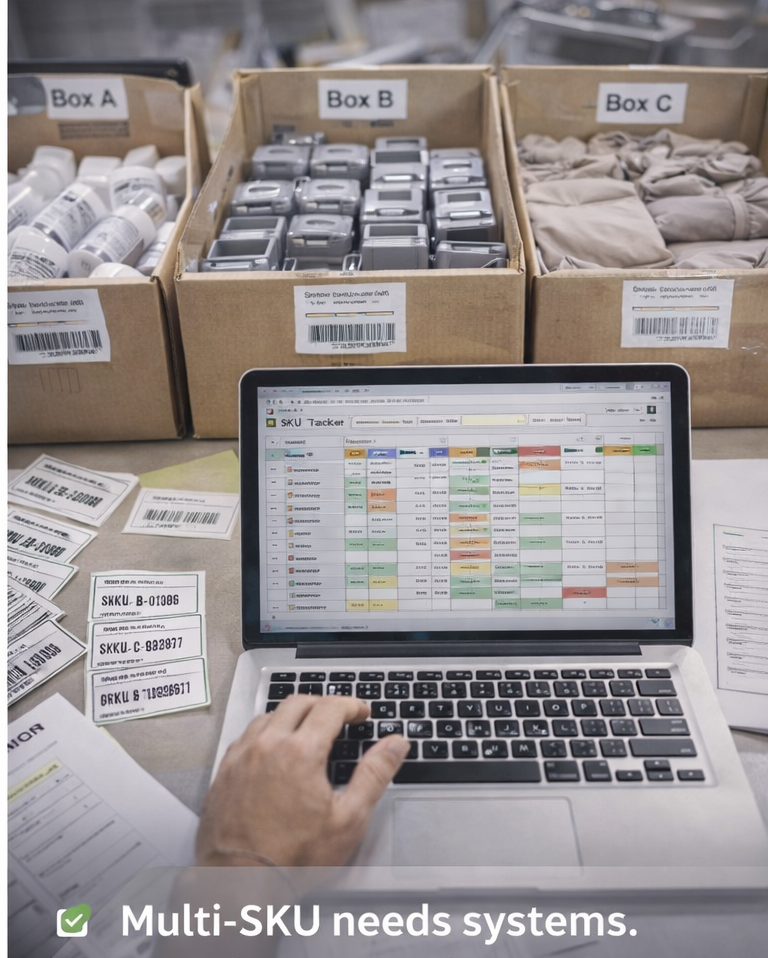
Once production starts, many buyers feel relieved too early. In reality, production is where many small inconsistencies begin to appear: color drift, material substitution, uneven workmanship, wrong accessories, inconsistent finishing, mixed-SKU confusion, and packaging preparation delays.
Stage 6: Check packaging, labels, and warehouse-stage details
This is one of the most underestimated parts of sourcing from China. A project can still fail operationally even when the item itself is acceptable.
- Barcode placed incorrectly
- Insert card not updated
- Wrong carton mark format
- Mixed SKUs grouped incorrectly
- Retail packaging not aligned with expectation
- Missing FBA or 3PL labels
Stage 7: Confirm shipment handoff and destination readiness
A very common beginner mistake is assuming that once production is finished and cartons are sealed, the order is shipment-ready. That is not always true.
Before goods leave China, buyers should be clear on what shipping term applies, where responsibility changes, whether carton counts and dimensions are final, whether labels and carton marks match the shipping plan, and whether destination requirements were followed.
Who is involved in a sourcing project
A sourcing project can involve more people than first-time buyers expect. Depending on the order, this may include the buyer, the supplier or factory, a trading company, a sourcing agent or coordination team, sample reviewers, quality control personnel, warehouse staff, freight forwarders, and destination-side warehouses such as FBA or 3PL facilities.
Not every order includes all of these roles. But the more moving parts a project has, the more important coordination becomes. This is why sourcing should not be treated as a simple product purchase. It is cross-functional project execution.
Where first-time buyers usually make mistakes
Most sourcing failures do not begin with one dramatic error. They usually begin with small assumptions made too early.
Mistake 1: Sending RFQs before the requirement is clear enough
When the requirement is vague, the supplier can still send a price. But that price may not be comparable, reliable, or useful.
Mistake 2: Comparing only the final number
A low unit price does not mean a low-risk project. Packaging, labels, MOQ logic, and shipping assumptions all affect the true cost.
Mistake 3: Treating sample approval too casually
The sample is not only about “does it look okay?” It is a chance to lock the expectations that matter in bulk production.
Mistake 4: Focusing only on product quality
Many projects do not fail because the item is defective. They fail because packaging, insert content, barcode placement, carton grouping, or handoff details were overlooked.
What buyers should prepare before asking for quotes
A sourcing project becomes much easier when the buyer prepares a simple sourcing brief before reaching out.
- Product photo or reference link
- Target use case
- Approximate dimensions
- Material expectation
- Color preference
- Quantity range
- Logo or customization request
- Packaging format
- Barcode or insert requirements
- Destination country and timeline expectations
When a sourcing agent makes sense
A sourcing agent is not necessary for every project. But many first-time buyers benefit from sourcing support when the order involves more coordination than simple production.
This is especially true when the buyer is importing for the first time, supplier screening matters, quotations need structured comparison, the order is customized or private label, packaging details need careful control, several suppliers are involved, consolidation is required, or the final destination is Amazon FBA or a 3PL warehouse.
In these cases, the value is not only in finding a supplier. The value is in reducing blind spots across the whole process.
Why this matters more than many beginners expect
At the beginning, many buyers mainly want answers to three questions: how do I find suppliers, how do I get a good price, and how fast can the order ship?
Those are reasonable questions. But real sourcing success depends on more than those first answers.
Sometimes the problem is not finding a supplier. Sometimes it is choosing the wrong supplier path. Sometimes it is quoting against unclear assumptions. Sometimes it is approving a sample too loosely. Sometimes it is ignoring packaging, labels, or carton marks until too late. Sometimes it is assuming shipment is ready when the handoff details have not actually been checked.
The best first question is rarely “who is cheapest?” A much better question is who can execute this project correctly from requirement to delivery?
Conclusion
Sourcing from China is not just about finding a factory and collecting prices. It is a process that connects product definition, sourcing path selection, quotation logic, sample confirmation, production management, quality control, packaging verification, warehouse coordination, and shipment handoff.
For first-time import buyers, the biggest mistake is often not one bad decision. It is underestimating how many parts of the project are connected.
When buyers treat sourcing as a full workflow rather than a single transaction, they ask better questions, compare quotations more accurately, and reduce the risk of expensive surprises later.
Need help moving from supplier search to shipment?
If you are planning your first China sourcing project and want clearer support on supplier selection, quotation review, order follow-up, or shipment coordination, explore our Sourcing & Procurement service and Shipping & Delivery support to see how we help buyers move from inquiry to dispatch with fewer surprises.
